Remote work
2023-12-06

5 disadvantages of working from home and proven strategies to overcome them
Working from home is not just freedom! The article highlights the downsides: from social isolation to the blurring line between job and private life to technical hurdles. Find out why communication and self-management are crucial and how hybrid models offer the perfect solution to minimize the disadvantages and take advantage of both worlds.

Table of contents
Home office, also known as teleworking or working from home, is a way of working in which you carry out your professional tasks from the comfort of your own home without being present in the traditional office. This form of work has gained popularity in recent years and undoubtedly offers many advantages. However, it is also important to understand the associated challenges. This article takes a look at the drawbacks of working from home and gives practical tips and an interesting alternative.
What are the disadvantages of working from home?

Some of the drawbacks of working from home include limited communication, loneliness, technical issues, home distractions, and poor work-life balance. The points mentioned are discussed in more detail below.
1. Restricted communication
A major disadvantage of working from home is the limited personal communication and spontaneous interactions that are common in traditional office environments. Team members who work from home often struggle to achieve the same exchange of information as if they were physically present. Because for many, the hurdle of calling someone using communication tools is greater than quickly running to the other person's desk. In addition, in offices, you only get a lot of information marginally, such as at the water dispenser, in the kitchen or in the corridor. In addition, the lack of personal interactions can lead to misunderstandings because micro-expressions, gestures, and facial expressions are lost during the chat.
2. Loneliness
Another disadvantage of working from home that builds on the previous point is the lack of personal contacts and social support. At first, this aspect may seem relaxed, but after a while it can significantly impair motivation and mental health. The limited informal exchange with colleagues can lead to feelings of loneliness and worsen team dynamics.
3. Technical problems and lack of equipment
Working in a home office is heavily dependent on modern technology and a stable Internet connection. Technical issues are very annoying because productivity and communication must suffer as a result. Slow Internet, unreliable software or device failures can of course also occur in the office, but then the IT department can fix the problems quickly in most cases. In the home office, this process takes longer and cannot be resolved with any replacement devices. Another point is home office equipment, which is not provided by every employer. An ergonomic chair, a height-adjustable desk and an additional monitor can quickly result in high costs.
4. Distractions at home
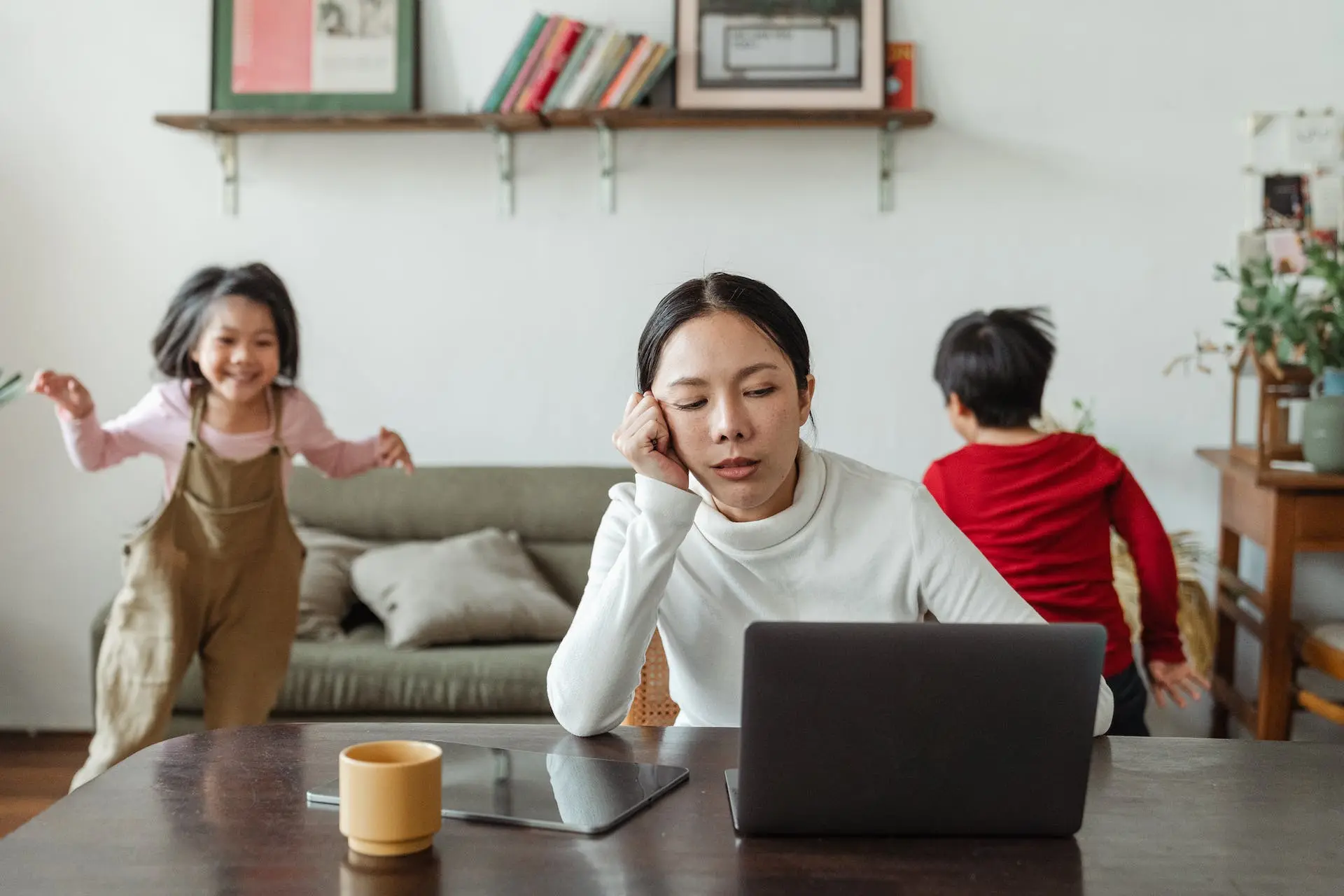
The home environment involves numerous distractions that can make concentration and productivity difficult. Family members, domestic duties, and non-work related activities can easily distract from work responsibilities. Concentration, discipline and time management can suffer, especially if you don't have your own enclosed office space in your home. A double burden of, for example, childcare or caring for relatives can create additional circumstances.
5. Poor work-life balance
Maintaining a balanced work-life balance is difficult for some, even with a traditional office job. If you now also remove the daily commute and possibly even a dedicated work space in your own home, the distinction between professional and private life becomes even more blurred. In addition, a feeling of constant availability can arise if you do not introduce a routine and set clear working hours.
How can you make the home office effective?

An effective home office routine with clear working hours, a dedicated workplace and regular preparation promotes a structured working day. It is important to keep the workplace away from bed and to maintain a work-life balance through physical activities, regular breaks and maintaining social contacts. These points are discussed in more detail below.
1. Introduce routine
An effective routine in the home office is crucial for a regular working day. In addition to clear working hours and a dedicated workplace, it also helps to get ready for the working day, as if you were going to the office. Staying in pajamas all day sounds tempting, but it doesn't necessarily help you start a regular working day.
2. Keep away from bed
Avoid working from your bed or sofa. Define a dedicated area of work to draw a clear mental line between your professional and personal life and increase concentration. A separate room would be ideal, but specifically assigned areas in the living room or in the bedroom may also be sufficient. It is important that this area is used exclusively for professional activities to promote separation and focus.
3. Maintain work-life balance
The constant presence of work-related tasks can impair personal time and lead to stress. To avoid burnout and maintain productivity, it's important to stick to core working hours and take regular breaks. In addition, bring the working day to a close consciously. This could be turning off the computer, leaving the study, or taking a short walk. Also try to do non-work-related tasks, such as doing laundry after work, to create a clear line and avoid distractions.
4. Keep in touch with colleagues
As discussed earlier, working from home can quickly become lonely. If you're still living in the same city, it's a good idea to meet up after work, perhaps over a beer. If you live in another city, you could still travel to the office occasionally for a few days to work from there so that your personal connection is not completely lost. If your company doesn't have a physical office, you can rent co-working spaces to socialize.
5. Get active
Eliminating the daily commute can lead to a decrease in exercise, so it is important to ensure a balance in sport. Be it through home workouts, walks, or other physical activities. This doesn't have to go to extremes; 30 minutes of exercise a day is proven to be enough to increase well-being.
Alternative to 100 percent home office: hybrid work
As described above, a pure job working from home is not suitable for everyone. An alternative to this is a hybrid working model. With hybrid work, employees can either flexibly decide whether they want to work in the office or at home. The days on which you can work from home are often set by your superiors. This allows employees to take advantage of the benefits of working from home without neglecting team dynamics. The hybrid work model has proven to be a good solution for taking into account the individual needs of employees and the requirements of employers.
Flexopus - The hot desking solution for hybrid work models
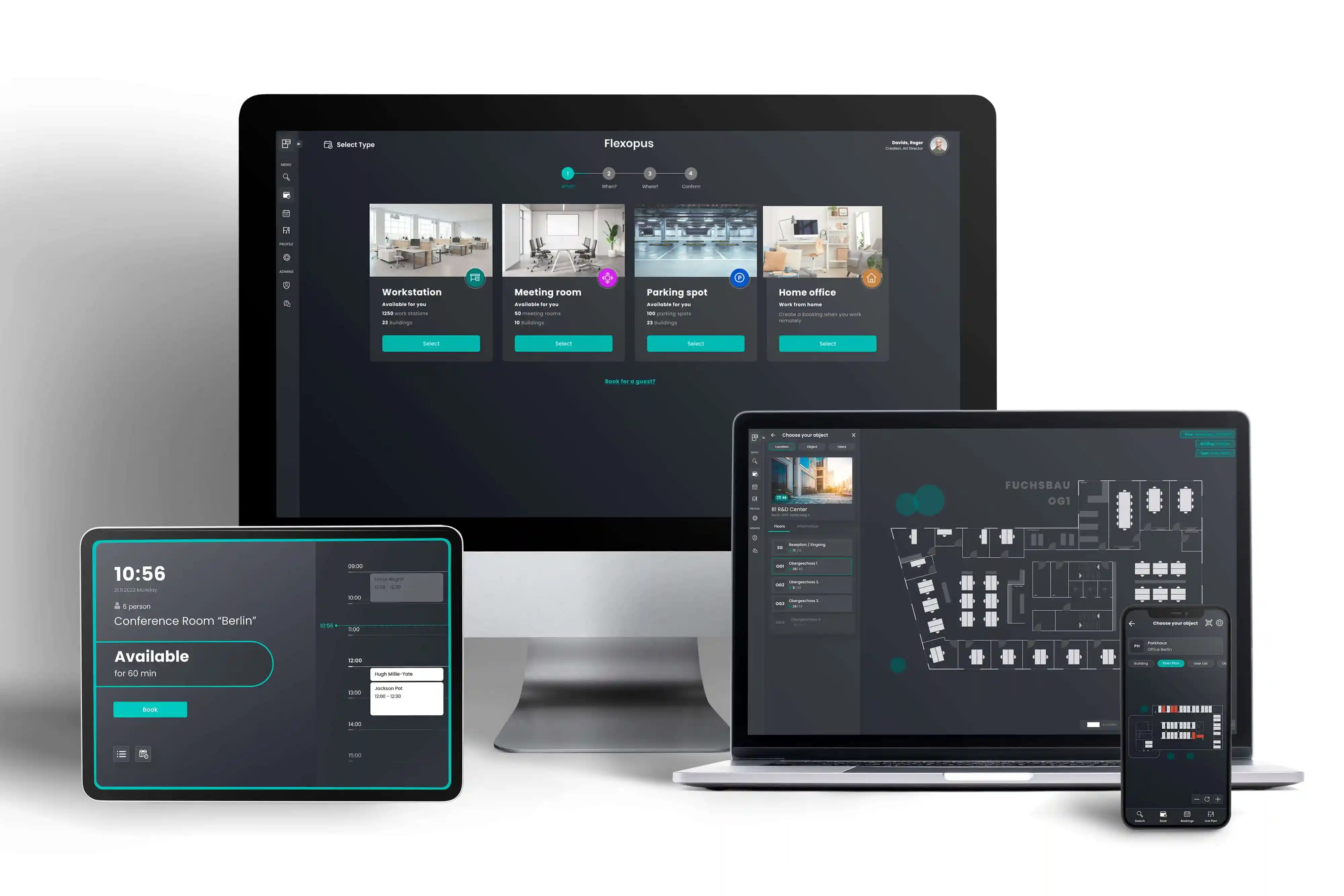
One increasingly important aspect of hybrid work is so-called “hot desking.” This eliminates the need for employees to have a fixed desk; instead, they can use any available workplace when they need it. As a result, office space can be used more effectively, especially if on average half of the workforce is working from home anyway.
So that there is no chaos during the daily search for a desk, Flexopus was developed. Flexopus is an intuitive hot desking solution with which you can book workplaces, meeting rooms and parking spaces within seconds. You can also see at a glance which of your colleagues are in the office or working from home. To get an even better overview of office utilization, you can use our smart analytics feature. The software is therefore an ideal tool for employees and employers who strive for easy work organization.
The most important questions summarized
What are the biggest social challenges when working from home on a permanent basis?

The biggest social hurdle is the threat of isolation and the loss of team spirit. Without informal exchanges at the coffee machine or eating lunch together, important social ties are lost. This can lead to loneliness and weaken identification with corporate culture. In addition, communication often becomes purely functional, which can make building trust and creative brainstorming processes difficult. Companies must therefore actively create digital social spaces or promote hybrid models to enable personal contact on a regular basis.
Why is it so difficult for many people working from home to separate professional and private life?
When working from home, the boundaries of space and time are blurred. Since the commute is omitted as a “buffer zone”, it is more difficult for the brain to switch to after work mode. The constant availability of digital tools makes it tempting to check emails even after work. This can lead to stress and exhaustion in the long term. A clear structure, fixed working hours and a dedicated workplace within the home are essential to avoid this mixing. Without conscious differentiation, the quality of recovery often suffers, which can impair mental health.
How can hybrid work models help to overcome the typical disadvantages of working from home?
Hybrid models combine the flexibility of working from home with the social benefits of the office. They enable employees to stay at home for focus tasks and to come to the office for collaboration or social exchange. Tools such as Flexopus make planning easier: You can see when the team is on site and you can book specific joint office days. This strengthens ties, promotes the exchange of knowledge and provides the necessary spatial separation from private life. This minimizes the risk of isolation while maintaining autonomy over one's own workplace.
Last updated:
2026-07-28
.svg)


