Workplace Management
2025-11-14
The end of paperwork: How digital asset management makes the office smarter
Order is half of (office) life! In this article, you'll learn how digital asset management (DAM) can end the chaos with your company resources. From cameras to company cars: We'll show you how to digitally manage equipment, automate booking processes and keep track of everything at all times. Put an end to paperwork and optimize your resource management!

Table of contents
Monday morning in the office: The projector for the meeting has disappeared, the e-bike for the customer appointment has already been taken out and no one knows who had the replacement laptop last. Sound familiar? It's no wonder! With ever expanding offices and a broadly dispersed workforce, it's easy to lose track of things.
A structured Asset Management ensures that such scenes are a thing of the past. With the right solution, you always remain in control of all company resources — and your team starts the week relaxed.
Why asset management is essential
Even the best workplace concept loses effect if work equipment, vehicles or devices are not managed transparently. Without structured inventory management, invisible chaos quickly ensues: Devices disappear, responsibilities are unclear, needs overlap — and valuable working time is lost.
A professional asset management system can help here. It bundles all information centrally in one place and makes the use of assets comprehensible.
This allows teams to know at all times:
- What resources are available
- Who uses or has reserved a specific asset
- When maintenance or returns are due
The result: More transparency, less coordination, lower costs.
Digital asset management is essential, especially in hybrid work models in which employees switch between office, home office and external appointments. It ensures that all resources are used optimally — regardless of where you work from.
In addition, it helps companies comply with compliance requirements and keep track of life cycles, maintenance, and responsibilities. This not only reduces administrative work, but also the risk of losses and incorrect bookings.
In short:
Asset management is no longer a “nice to have” but the basis for modern office life.

Use Case 1: An employee wants to borrow a pool vehicle
Lisa works in sales and has a customer appointment outside the city for the next day. She wants to use one of the company vehicles for this — a classic case for asset management.
In the past, Lisa would have written several emails, made a phone call or looked at an Excel list to check which vehicle was available. Today, she simply opens the digital booking tool:
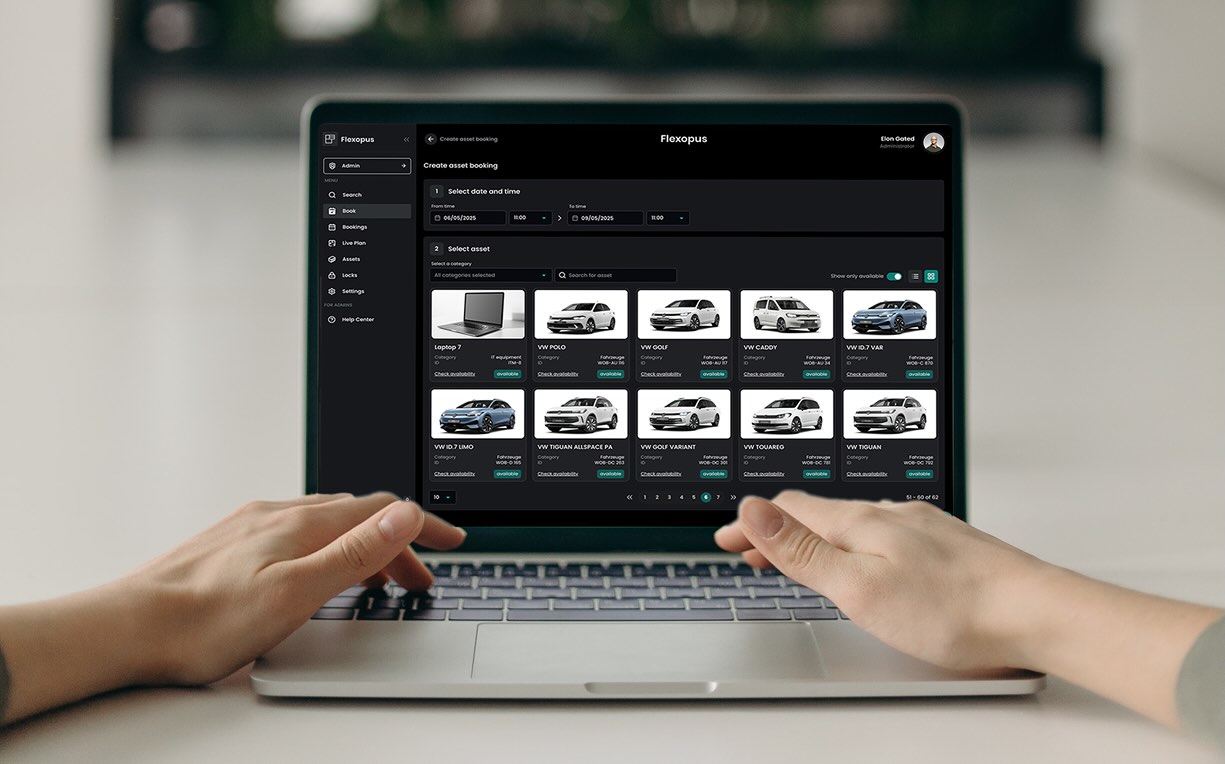
- She can see at a glance which pool vehicles are available.
- With one click, she reserves the desired car for the required period of time.
- The system automatically documents the driver, time, mileage and reservation duration.
After use, Lisa can mark the vehicle as “returned” with just a few clicks. The company benefits in two ways:
- Transparency: Everyone can see which vehicle is in use in real time.
- Efficiency: No double bookings, no reconciliation errors.
- Traceability: All bookings and uses are documented in an audit-proof manner.
Use case: When a new employee is enrolled in school
A new colleague starts working for the company - let's call him Tom.
So that he can get started right away on his first day of work, a lot of equipment must be prepared: laptop, monitor, headset, access card and maybe even a work cell phone.
With the appropriate software, the Office team can see exactly which devices are available and to whom they are currently assigned. With just a few clicks, the required assets are reserved for Tom and assigned permanently. The following is automatically documented in the background:
- Who received which device and when
- Serial numbers and status of the transferred assets
- Maintenance cycles or replacement dates
This not only gives the IT department an overview of the equipment inventory, but also HR and Facility Management know what equipment is in circulation at all times.
If Tom leaves the company at some point, his entire inventory can simply be withdrawn from his profile and reassigned — without chaos, losses or time-consuming reconciliation.
Use case: When lockers are managed digitally
Employees need secure storage facilities for personal belongings, technical devices or documents — especially when there are no longer permanent workplaces.
With a digital asset management system, lockers can also be managed centrally and used efficiently.
A practical example:
Sarah works in the office on alternate days and needs a locker on these days to safely store her laptop and personal belongings. With the digital booking system, she can reserve a free locker with just a few clicks. The system automatically assigns it an available compartment — optionally even with a digital lock or QR code access.
The facility team sees in real time in the live plan
- Which lockers are currently occupied or vacant
- Which subject is assigned to whom
- and when reservations end or need to be extended.
Temporary assignments — for example for interns, external guests or project teams — can also be managed easily and comprehensibly.
Everything under control with Flexopus Asset Management Software
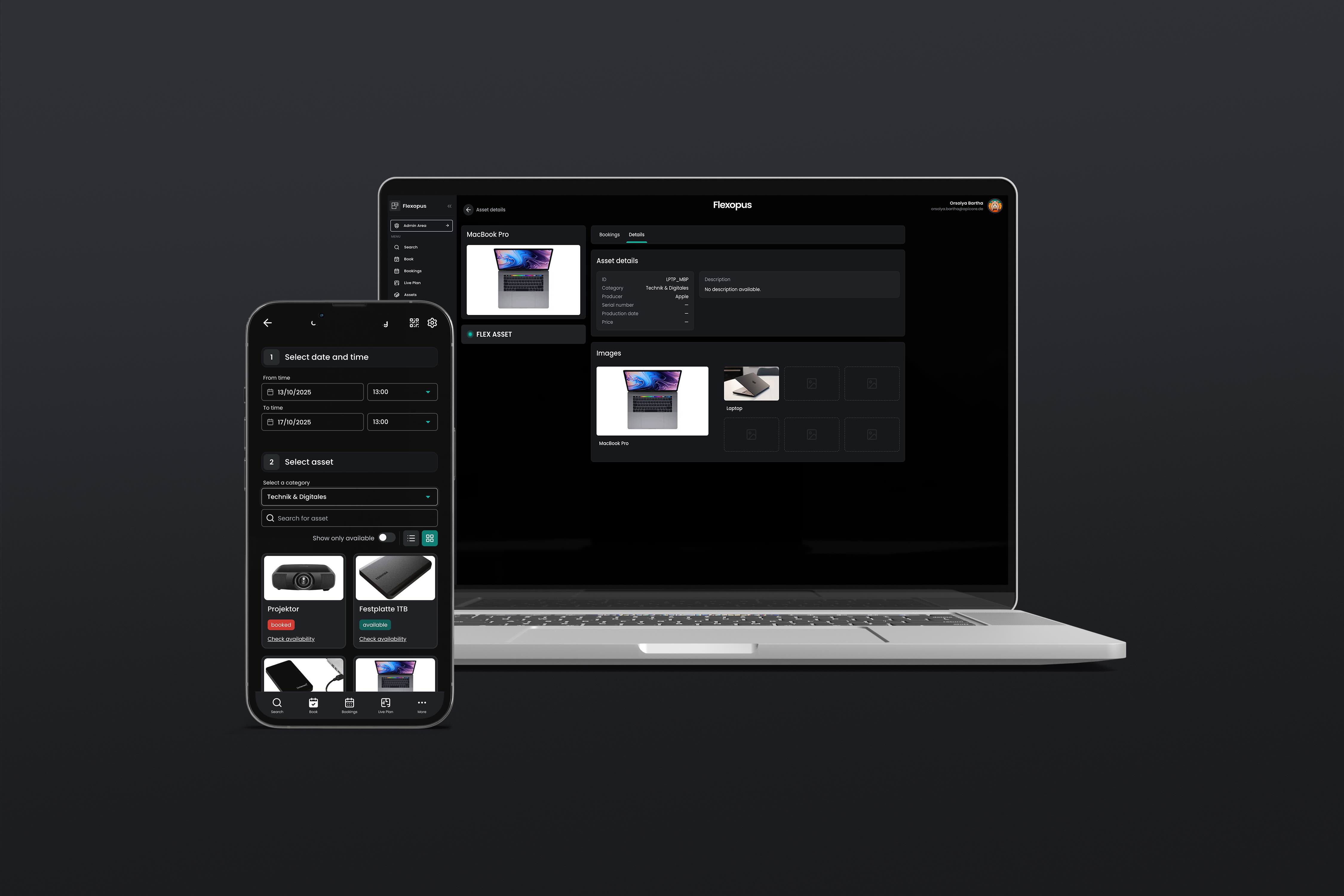
Whether it's a company vehicle, a laptop or a locker — the examples presented show how diverse modern work equipment can be in everyday office life. But it is only with a central platform that many individual solutions become a consistent and straightforward process. Right here comes the Flexopus Asset Management Software into the game.
With Flexopus, companies keep an eye on all assets in one place — from allocation to use to return.
The system combines intuitive operation with maximum transparency and is completely integrated into the Flexopus Workplace Ecosystem integrated.
This is how companies benefit from Flexopus:
- Central overview: All assets — from pool vehicles to monitors — are digitally recorded and can be retrieved at any time.
- Easy assignment & return: Employees book, receive or return devices with just a few clicks via the dashboard or via QR code.
- Automated processes: Returns are automatically documented.
- High level of security: Role and rights management ensures that only authorized persons have access to sensitive assets.
- Seamless integration: The module perfectly complements existing Flexopus solutions such as Desk sharing software, that Visitor Management or the Meeting room display app.
Especially in times of hybrid work, it is crucial to use resources efficiently and manage them transparently. Die Flexopus Asset Management Software creates the ideal basis for this - hosted flexibly, securely and fully GDPR-compliant on European servers.
This turns administration into a real overview - and everyday office work into smart work.
Frequently Asked Questions summarized
What exactly is digital asset management in the context of modern office organization?

Digital asset management (DAM) refers to the central, digital administration and organization of all physical or digital resources of a company. In everyday office life, this means that instead of laboriously managing equipment such as projectors, pool vehicles or IT accessories via lists, these assets are recorded in software such as Flexopus. This makes it immediately visible to every employee what is available, who is currently using it and when it will be available again. This saves time, is easy on the nerves and prevents the loss of valuable equipment.
What are the specific benefits of booking assets directly via a desk sharing tool?
The biggest advantage is the “single point of truth” solution: employees don't have to switch between different tools. Anyone who books a workplace can also reserve the required accessories (e.g. an adapter or a locker) in the same step. For administrators, this means complete documentation and automated processes. In addition, maintenance intervals can be better planned and the actual utilization of assets can be analyzed, which enables well-founded decisions for new purchases.
How does a digital system help to reduce losses and incorrect planning in company equipment?
Personalized booking creates clear responsibility. Since each item is assigned to a user and a period of time, the rate of “disappeared” equipment drops drastically. At the same time, the system prevents double bookings and ensures transparency: If an asset is defective, it can be marked immediately so that subsequent users are informed in good time and can plan alternatives. This ensures a smooth workflow and protects the company's investments.
Last updated:
2026-04-01
.svg)