Desk sharing
2025-12-22

The Flexopus Desk Sharing Guide
Successful desk sharing requires more than just software. Our guide shows you how to master the transition to flexible working: From needs analysis to clear game rules (Clean Desk!) all the way to involving the workforce. Learn how to reduce resistance, increase space efficiency and create a modern office culture in which everyone feels comfortable.
Desk sharing checklist
Download the checklist for the introduction of desk sharing and find the ideal solution for your company!

Table of contents
Flexible working is no longer just a trend, but a reality in many companies. Hybrid work models, in particular, present companies with new challenges: How can workplaces be optimally utilized when not all employees are in the office every day? This is precisely where desk sharing comes in. In this guide, we explain what shared desk means, what a desk sharing concept looks like, what challenges and success factors exist, and why desk sharing software is indispensable.
Why is a desk sharing guide important?
The term Desk Sharing describes a work model where multiple employees share a desk. This means that not all employees have a fixed workstation; instead, desks are used flexibly. Desk sharing is often equated with terms like Shared Desk or Hot Desking , but at its core, the same concept is meant. You can find more information on the definition in the Glossary.
For desk sharing to work, a well-thought-out concept is needed. A desk sharing guide defines the rules and framework to prevent the work method from ending in chaos with Excel spreadsheets and frustrated employees.
Components of a Desk Sharing Guide and Questions to Ask:
- Analysis of Space Utilization: How many employees are actually in the office at the same time, and how many workstations are needed?
- Resource Allocation: Which areas are designated for which teams? Should spaces only be available for specific teams, i.e., divided into so-called Homezones ?
- Rules and Guidelines: Cleanliness, personal belongings, reservation times – A clean desk policy is essential. What rules are needed?
- Communication: All employees must understand the benefits and accept the change. How will the implementation be communicated?
A good desk sharing concept considers not only the office space but also the company culture and the needs of all employees.
Desk Sharing in Daily Work
-min%20(1)%20(1).png)
Without digital support, desk sharing is hardly practical. This is where Desk Sharing Software comes in.
This software allows for the management of workspaces. Employees can see in real-time which desks are free or reserved, enabling them to plan their ideal workday.
The reasons why desk sharing is indispensable for a modern office are manifold: With a clear workspace booking system via a Workplace Management Software, it is clearly defined who sits where and when. This provides predictability and prevents frustration when searching for a desk. Furthermore, the simple administration for admins, along with detailed analysis functions, stands out: precise optimizations of space can be made, and in the best case, space can even be saved.
Transparency regarding utilization and space requirements is interesting for both the environment and the company's finances. Additionally, desk sharing enables the fair distribution of work resources, regardless of whether colleagues arrive at the office in the morning or only at midday. If the resource is booked with desk sharing software, it remains fair. Another exciting aspect is the integration into the existing work environment through connections to Outlook, Teams, Google and many more.
Reliable desk sharing software is crucial for gaining team acceptance, especially for companies looking to introduce desk sharing in Germany. After all, 'you can't teach an old dog new tricks.'
However, desk sharing also comes with its challenges, which can be found in the blog post “Advantages and Disadvantages of Desk Sharing” .
Best Practices: Shared Desk Etiquette
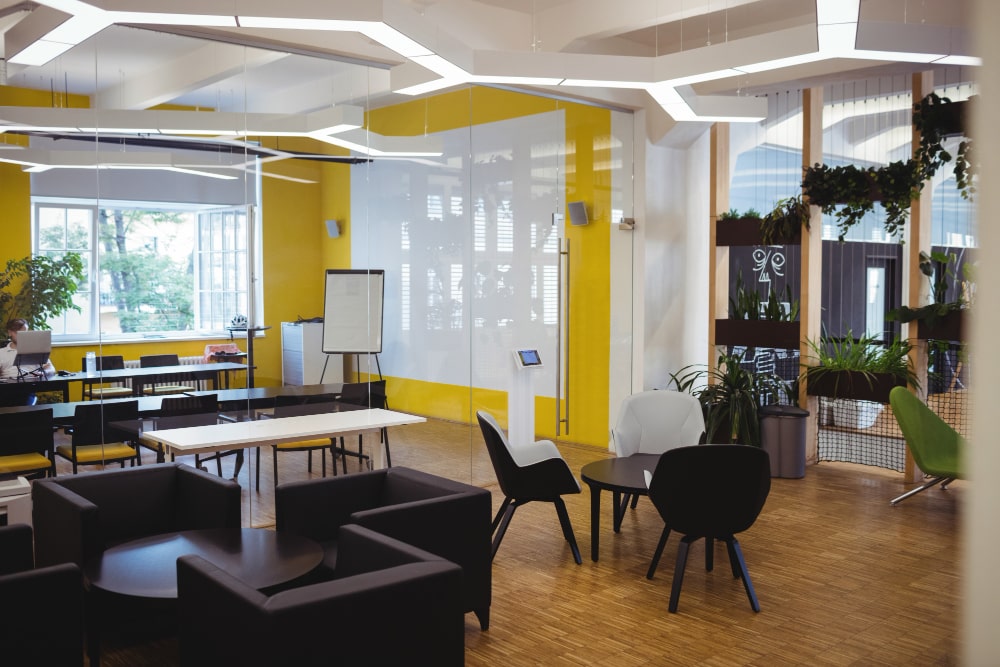
For desk sharing to work, shared desk etiquette is essential. With the introduction of shared desks or hotdesking, workstations should be left in a way that allows users to work clearly and without the clutter of the previous occupant. These points are particularly essential for introducing desk sharing:
Leave the workstation as you found it. After all, who wants a colleague's crumbs on their keyboard? Documents and IT hardware must be put away after using the workstation. To avoid having to take these items, such as a hard drive or work laptop, home, one could take the opportunity to place everything needed again the next day in a locker. With Flexopus, you can easily use a locker via SmartLocks: This way, all documents, folders, and IT hardware are neatly stored and secure.
- Desk Neutrality:
Personal items should be taken home after work or, as mentioned under point 1, properly and securely stored. For example, in a locker, safe, or designated cabinets.
- Mutual Respect:
It goes without saying, but it is essential to show consideration for colleagues and avoid unnecessary disturbances in the shared space. Loud conversations and team workshops can take place in designated zones, meeting rooms, or dedicated phone booths, which can also be managed via Flexopus.
- Tech Check:
Devices must be handled properly, updated according to company guidelines, and maintained. With the shared desk principle, it is important that defects are reported directly to the responsible admin so that the workstation can be used comfortably and fully functionally by everyone.
Desk Sharing: Step-by-Step Introduction and Guide
Introducing desk sharing is a change process that requires good change communication. As the saying goes: Humans are creatures of habit! However, with the right steps, it can be implemented smoothly:
1. Analyze your own space
To understand your team's needs, you should first inquire about their habits, determine the minimum standard setup for workstations, and calculate the average number of days the team spends in the office per week.
This analysis is incredibly important for determining the correct number of desks and enabling efficient hotdesking. If an arbitrary number of desks is introduced without data, shared desk arrangements can quickly lead to frustration and resistance. Therefore, the rule is: First define the spaces and develop a customized concept!
2. Develop your own concept
Using the data from the analysis, zones for collaboration, phone calls and video calls, meetings, and breaks can be defined. How can desks be arranged to allow for ideal focused work, while still enabling spontaneous conversations? This concept is the cornerstone of desk sharing.
3. Change Communication
To gain team acceptance, the initiative must be clearly communicated. Highlight all the benefits of desk sharing and bring your team along on the journey to a modern smart office.
4. Software Selection and Joint Testing Phase
Desk sharing only works with the introduction of a desk booking tool, to make workstations easily bookable with just a few clicks. Don't leave the entire responsibility to the team, as this can quickly lead to rivalry and frustration.
Choose the most suitable software, compare prices, set clear requirements, and launch a pilot program with a small group. These insights are crucial for the implementation of desk sharing.
-min%20(1).png)
4. Implement Software
Choose a desk booking system or, ideally, a comprehensive workplace management software like Flexopus, and implement it carefully. Bring your concept to life with Flexopus floor plans and map out all zones, desks, rooms, and perhaps even parking spaces. Involve your team, ensure proper communication, and build trust.
5. Employee Feedback
Collect feedback after the first month of implementation and take criticism and praise very seriously. Most concerns have valid reasons for which solutions exist, and addressing them will significantly increase efficiency and and acceptance. Flexopus also offers free features such as catering and facility service bookings and event management. Perhaps through your team's feedback, you'll discover ways to further optimize internal processes (for free).
6. Measure Results
After six months, initial optimizations and restructuring can already be implemented based on Flexopus analysis data. Perhaps there are office areas that are rarely used, the equipment at some desks is inadequate, there are too few phone booths for calls, or a check-in system for desks is needed. With Flexopus, you can continuously optimize your smart office together with your team.
7. Scale results and save costs
Do you have other locations where desk sharing makes sense? With the insights gained over the past months, you can scale further. In addition to workstation, meeting room, and parking space booking, Flexopus also offers the Visitor Management including kiosk terminal and badge printing, and the Asset Management for IT hardware and fleet inventory.
All of this can be managed all-in-one.
Desk Sharing Checklist / Implementation Guide
Download the desk sharing checklist and find the optimal solution for your company!
Conclusion
Desk sharing is at the heart of modern offices. It is a sustainable answer to the demands of modern, increasingly digital work environments. With a well-thought-out desk sharing guide and the right software, the model can be successfully implemented.
Companies benefit from cost savings, flexibility, and efficient space utilization. At the same time, it requires clear rules and open communicationto avoid disadvantages. It's clear that company culture largely determines whether it succeeds or not. Trust, delegation of responsibility, and involving the team in defined processes are just as crucial as a good concept and the right software.
Be sure to create an individual checklist for this, based on the points listed here for implementation using a guide. Flexopus is happy to help you with this. Contact us here without obligation!
Flexopus is one of the leading desk sharing solutions in Germany. Our user-friendly desk sharing software makes it incredibly easy to book workstations, meeting rooms, parking spaces, and IT hardware. Additionally, visitors can be registered in a data-compliant manner. 100% data protection compliant, secure, and flexible.
The most important questions summarized
What are the most critical success factors when introducing desk sharing in companies?

Success depends on communication and clear framework conditions. It is essential to get employees on board early on and to take fears of losing their regular position seriously. In addition, technical requirements such as intuitive booking software (e.g. Flexopus) and suitable hardware equipment (docking stations, lockers) must be met so that the daily change works smoothly and without wasting time.
What role do “clean desk policies” and rules of conduct play in a shared office?
A clean desk policy is the backbone of desk sharing. It ensures that workstations are left empty and clean at the end of the day, so that the next colleague can start immediately. In addition, clear etiquette rules — such as on volume in certain zones or on the private design of tables — help to avoid conflicts and maintain a professional, respectful working atmosphere for all users.
How does desk sharing help improve space efficiency and corporate culture?
Desk sharing can reduce unused vacancy (due to vacation, illness or home office), which saves rental costs or creates space for creative collaboration spaces. Culturally, it breaks up silos: Employees are more likely to sit next to colleagues from other departments, which promotes the informal exchange of knowledge and makes hierarchies appear flatter. In this way, the office is transformed from a rigid administrative unit into a dynamic meeting place.
Last updated:
2026-09-10
.svg)

.webp)

.jpg)