Modern office concepts
2025-12-08
.webp)
Needs-based work: Why individual solutions are the key to success
Starr was yesterday! In this article, you'll learn how needs-oriented work inspires your team. We'll show you how to use various zones — from focus areas to social hubs — to create an office environment that adapts flexibly to the tasks of your employees. Discover how desk sharing is becoming a tool for greater productivity and wellbeing.

Table of contents
The days when all employees sat at the same desk, came to the office at the same time, and worked with identical equipment are over. The modern working world has become more diverse, flexible, and significantly more complex. Today, it is shaped by hybrid work models, desk sharing and flexible office spaces. This presents companies with the challenge of accommodating a wide range of needs. But this is precisely where the opportunity lies: those who focus on needs-based work not only create more satisfied teams but also measurably increase productivity.
What does needs-based work mean?
The term "needs-oriented" originally comes from pedagogy, where it describes how parents and educators respond to the individual needs of children instead of following rigid rules. This approach translates perfectly to the workplace. Because your employees also have diverse needs that don't fit into a one-size-fits-all mold.
Needs-based work, then, means taking the individual requirements of your teams seriously and incorporating them into workplace design. It's about recognizing different work styles, tasks, and preferences and creating appropriate conditions.
Instead of a one-size-fits-all approach, this enables tailored solutions – for every department, every team, and ultimately every individual in your company. This might seem elaborate initially, but in the context of Work 4.0 and Leadership 4.0 this individual approach is becoming increasingly important.
Why every department operates differently
Let's look at reality: your IT department operates completely differently from your sales team. While developers meticulously work on complex problems for hours, your sales team simultaneously juggles multiple customer calls. IT needs high-performance hardware, multiple screens, and absolute quiet. Sales, on the other hand, thrives on communication, is often on the go, and requires flexible working hour models.
Then there's the HR department. This is where confidential conversations take place and sensitive employee data is managed. Your HR team needs discreet spaces and protected work areas. The situation is completely different in marketing, where creativity and teamwork are paramount.
These differences are not trivial – and in an open-plan office difficult to reconcile. If you put all teams into an open-plan office if you don't provide spaces for retreat, you pay a high price: declining motivation, and in the worst case, even Burnout due to constant overwork.
If you're also facing these challenges, expert Workplace Management combined with needs-based working could be exactly the right solution for your company.
Mastering practical challenges in daily work
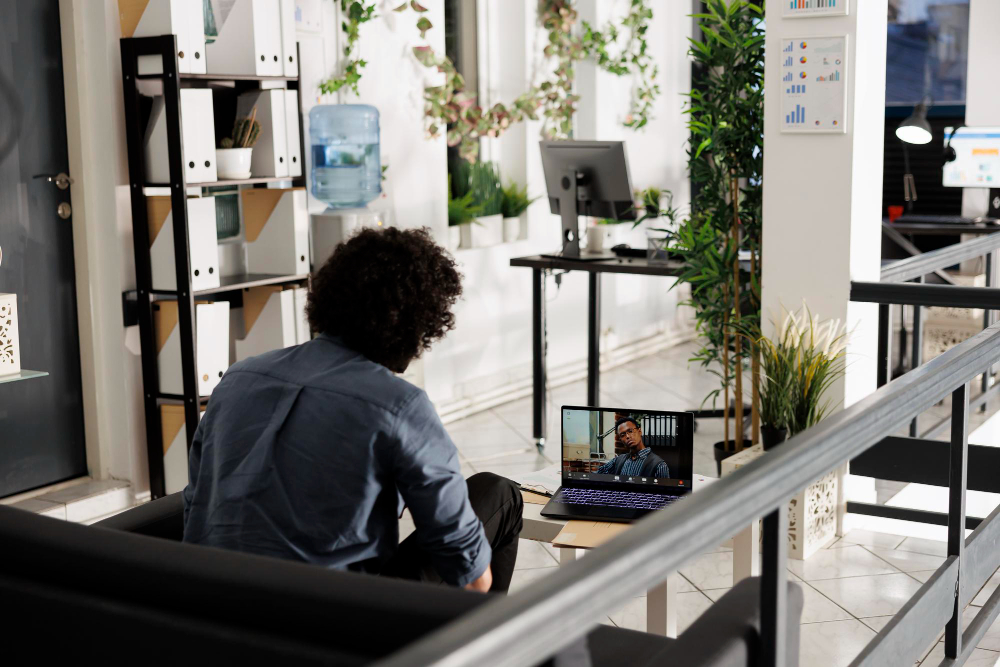
But how do you actually implement needs-based work? The challenges become apparent in everyday life: Your IT department wants to work remotely three days a week, while sales employees commute between the office and external appointments. The HR team needs fixed in-office days for job interviews. Hybrid work therefore requires smart planning.
Workstation equipment also gets complicated. The developer needs three monitors and ergonomic input devices – Ergonomics is, after all, not a luxury, but essential for workplace health. The colleague from customer service needs a high-quality headset and a height-adjustable desk. Your graphic designer, however, swears by a large screen with color calibration.
And then there are the parking spaces: Who is on-site daily? Who has client appointments and definitely needs a parking spot? A smart Parking Management can avoid conflicts here.
Coordinating all these aspects manually takes time and effort. Without a system, conflicts may arise, which office space is used inefficiently, and in the end, everyone is dissatisfied. So how do you accommodate everyone's needs? Flexopus helps.
How Flexopus Enables Needs-Based Working
-min%20(1)%20(1).png)
Flexopus is a Workplace Management Software, which significantly simplifies needs-based working. As a modern room booking system, Flexopus helps you intelligently organize workplaces, meeting rooms, and other resources – perfect for companies that rely on desk sharing and flexible office concepts. Let's take a closer look at how Flexopus can support you in implementing needs-based work:
Smart Tags for Individual Requirements
One of the clever features is tags. You can label every resource – whether it's a desk, meeting room, or parking space – with specific characteristics.
Your employees no longer search for just any free spot, but precisely the workspace that suits their needs – by searching for the relevant characteristics or tags. The developer filters for "multiple monitors" and "quiet zone." The sales representative looks for a spot "near a phone booth." This saves time and ensures that everyone can work optimally in a needs-oriented way.
Homezones for Department-Specific Areas
You take it a step further with the Homezones concept. Homezones are defined areas in your office tailored to the specific needs of individual departments. This goes beyond classic Activity Based Working .
For example, set up an HR zone – a quiet area with soundproof meeting rooms for confidential discussions. Here, your HR colleagues will find the discretion they need for employee discussions.
The sales zone, on the other hand, could look completely different, as it's a hub of productive activity. You equip this area with several phone booths so that customer calls can be made without disturbing other team members.
For your IT department, you create a zone with top-tier equipment: powerful computers, large monitors, ergonomic keyboards. The atmosphere is more focused, and disturbances are minimized.
The beauty of it: you still remain flexible. If a project is cross-departmental, employees can also book outside their Homezone book – without losing track. Flexopus makes it possible.
Needs-Based Working: The Added Value for Companies and Employees

What does this approach bring you? A great deal. Satisfied employees are more productive – this is scientifically proven. When people work in an environment that suits their needs, their motivation and commitment to your company automatically increase.
At the same time, you optimize your space utilization and can, in the long run, reduce costs. With Flexopus, you can see at a glance which resources are being used when, and plan your spaces accordingly.
An underestimated factor is employer branding. Companies that adopt a needs-based approach and offer true flexibility are more attractive to outstanding talent. In job interviews, you should clearly demonstrate how you cater to individual needs – because that's exactly what employees are looking for today.
Conclusion: The future is personalized
A needs-based approach to work is the logical answer to a diverse, flexible work environment. Your employees are diverse, their tasks vary, so their working conditions should also vary. Those who recognize and implement this create a win-win situation.
The good news: You don't have to reinvent the wheel. With tools like Flexopus, needs-based work becomes practical. Smart tags, flexible home zones, and an intuitive booking platform transform a complex challenge into an intuitive and clever solution.
Companies that now address the needs of their employees gain a true competitive advantage. So why wait? Try Flexopus and experience for yourself how straightforward needs-based work can be.
The most important questions summarized
What exactly does “needs-oriented work” mean in the context of the modern office world?

It is a concept in which the office environment follows the various activities of the working day, not the other way around. Instead of a fixed desk, employees choose the location that best suits their current task — whether concentrated breastfeeding, creative brainstorming in a team or informal exchange in the lounge. This approach recognizes that different cognitive processes also require different spatial conditions to deliver optimal results and promote mental health.
Which different zones should a needs-oriented office concept include?
A well-planned office offers a mix of: 1. focus zones (silent areas) for deep concentration without distraction, 2. collaboration zones for meetings and creative exchange, and 3. communication zones such as cafeterias or lounges for social interaction. Desk sharing tools like Flexopus help manage these resources efficiently and ensure that every employee finds exactly the space they need for their wellbeing and productivity.
How do companies benefit from the transition to needs-based structures in the long term?
As a result, companies not only increase employee satisfaction and retention, but also optimize their use of space. When the office is perceived as an attractive “magnet” that makes real work easier, the motivation to be present on site increases. At the same time, usage data from desk sharing systems provides valuable insights into which zones are actually needed. In this way, rental and energy costs can be reduced while innovative strength is strengthened through more random, cross-departmental encounters.
Last updated:
2026-07-24
.svg)


.webp)
.webp)