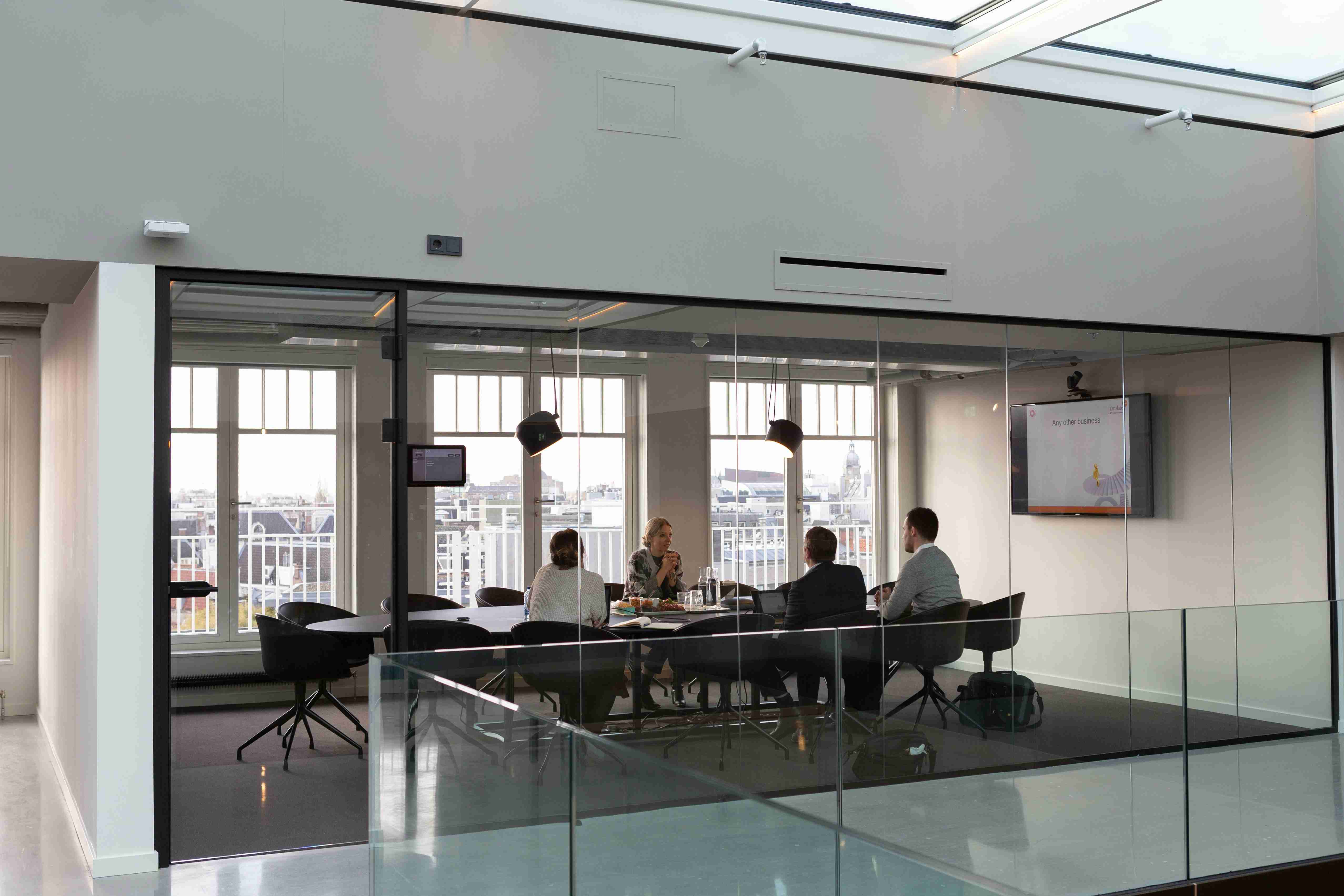
Space Booking Software: Efficiently book and manage workstations and rooms
Space booking software helps companies centrally book and efficiently manage workstations, meeting rooms, and other workspaces. It provides transparency regarding availability and utilization, facilitates team coordination in hybrid work models, and combines room booking, desk booking, and integrations into a unified platform. This makes workplace management structured, flexible, and clear for everyone involved.
Table of contents
Our working world is defined by hybrid models, flexible workspaces, desk sharing, and the increasing use of coworking spaces. Employees switch between the office, home office, and external locations, teams work on a project basis, and meetings take place both on-site and virtually. In this environment, the structured booking of rooms, workstations, and meeting spaces becomes a key success factor.
Space booking software helps companies organize these resources digitally. It acts as a central platform for room booking, desk booking, and space management. Instead of manual coordination or isolated calendar solutions, a modern room booking system enables transparent planning, simple booking, and efficient management of all spaces.
What is space booking software?
Space booking software is a digital booking system that allows companies to centrally plan and book workstations, rooms, parking spaces, and other areas. It forms the foundation for structured space management and replaces manual processes with a unified booking platform.
Typical use cases include:
- Room booking for meetings, workshops, and training sessions
- Booking workstations in a desk-sharing model
- Organizing coworking spaces
- Managing project and focus zones
- Real-time overview of utilization and availability
At its core, the software ensures that everyone knows which spaces are available, how they can be booked, and how usage is managed transparently.

Why is space booking important for companies?
Without a central room booking system, organizational problems arise quickly. Double-booked meeting rooms, unused workstations, or uncertainty about where teams are working are typical challenges. Especially in hybrid organizations, there is often a lack of overview regarding available workspaces and their utilization.
Space booking software creates structure here. It enables efficient management of rooms and workstations, clear assignment of bookings, and demand-based space planning. This not only improves office space utilization but also increases employee satisfaction, as they can reliably book the resources they need.
Key features of space booking software
The main features of modern space booking solutions go far beyond a simple calendar view. A professional booking platform offers, among other things:
- Central room booking for all locations
- Booking workstations and desk-sharing zones
- Managing coworking spaces
- Real-time overview of available workspaces
- Role and permission systems for management and users
- Rule-based booking (e.g., quotas, time slots, priorities)
- Reporting on utilization and capacity planning
- Optional: Mapping of billing and cost centers
These features turn the booking and management of spaces into a clearly structured process.

Space booking as part of workplace management
In modern workplace management, space booking is not an isolated topic. Booking rooms and workstations is closely linked to attendance planning, team organization, and resource management. Space booking software serves as a central platform where all relevant information converges.
Teams can see where colleagues are working, project groups can reserve suitable meeting rooms, and management receives an overview of actual space usage. This turns the office into a flexibly usable infrastructure rather than a rigid work environment.
The space booking software from Flexopus is part of a comprehensive workplace management platform that helps companies centrally manage workspaces, rooms, parking spaces, and other resources. Unlike isolated tools for room booking or individual reservation systems, Flexopus brings all relevant resources together on one platform—from booking to a real-time overview of utilization and availability.
Flexopus makes it easy to book spaces, define access and settings for members and external users, and store booking data in a standardized way. By integrating with calendars, identity services, or access control systems, existing processes can be extended without introducing additional media discontinuities or redundant systems.
This creates a unified and scalable solution that allows companies not only to manage rooms efficiently but also to create transparency in daily workflows and support flexible working models.
Integrations and integration options
A decisive factor when choosing space booking software is the available integrations. Only when the solution fits seamlessly into existing systems can it reach its full potential.
Important integration options include:
- Calendar systems (e.g., Outlook, Google Calendar)
- Identity and user management (SSO, directory services)
- Collaboration tools such as Microsoft Teams or Slack
- Building and access control systems
- Billing systems or ERP solutions
Through such integrations, the space booking software becomes part of a seamless digital ecosystem. Bookings can be synchronized automatically, access can be controlled, and processes can be mapped without media discontinuities.
Space booking in the coworking environment
Space booking also plays a central role in coworking. Different user groups share workstations, meeting rooms, and common areas. A flexible booking platform makes it possible to book these resources transparently, manage utilization, and—depending on the model—even integrate billing per usage unit.
This is where the importance of a high-performance room booking system becomes particularly clear: without clear booking rules and a real-time overview, shared spaces can hardly be organized efficiently.
Management and billing of spaces
Beyond simple booking, the billing of rooms and workstations is becoming increasingly important. Many companies account for cost centers, project budgets, or external user groups. Space booking software can help by assigning bookings to specific units and providing usage data for internal or external billing.
This makes space management transparent not only organizationally but also from a business perspective.

Space booking software as the booking system of the future
A modern booking system for spaces is much more than a digital room calendar tool. It forms the foundation for flexible working models, efficient space utilization, and transparent processes. Through a central platform, workspaces, rooms, workstations, and meeting rooms can be planned and managed in a standardized way.
With clear core functions, extensive integrations, and well-thought-out integration options, space booking becomes a strategic component of workplace management. Companies gain a powerful tool to control bookings, optimize resource usage, and make their work environment future-proof.
Fazit
Space booking software is now a central element of modern office organization. It combines room booking, workstation booking, coworking management, and system integrations into a unified booking platform. Companies benefit from greater transparency, efficient use of their workspaces, and clear processes for booking, administration, and billing.
A high-performance room booking system creates the foundation for flexible working models, supports management in capacity planning, and enables employees to easily book and reliably use the spaces they need. In a work world that is becoming increasingly hybrid and dynamic, space booking software is an indispensable tool for organizing modern work environments.
The most important questions summarized
What is space booking software and why do companies need it?

Space booking software is a digital platform for reserving office resources such as desks, meeting rooms, or parking spaces. In the era of hybrid work, it is essential for organizing daily office life and avoiding frustration when looking for a spot. It provides employees with transparency regarding available capacity and enables companies to manage their space more efficiently, reduce costs, and significantly lower the administrative burden of space planning.
How does space booking software help optimize office space?
Through detailed analytics, the software provides insights into which areas are actually being used and which are sitting empty. This allows companies to make data-driven decisions rather than relying on gut feeling. It enables the reduction of unused leased space or the transformation of rigid offices into demand-oriented collaboration areas (activity-based working), which saves enormous costs in the long term and maximizes space efficiency.
What impact does the software have on employee satisfaction?
It significantly reduces stress in the daily work routine. Employees can be sure that a desk will be waiting for them when they arrive at the office and can see in advance where their team members are sitting. Thanks to intuitive operation and integrations (e.g., with Outlook or Teams), the tool fits seamlessly into the workflow. This reliability and flexibility are key components for a positive employee experience in an agile corporate culture.
Last updated:
2026-10-12