Desk Sharing in the Skilled Crafts Sector: Tradition Meets Flex-Office

Table of contents
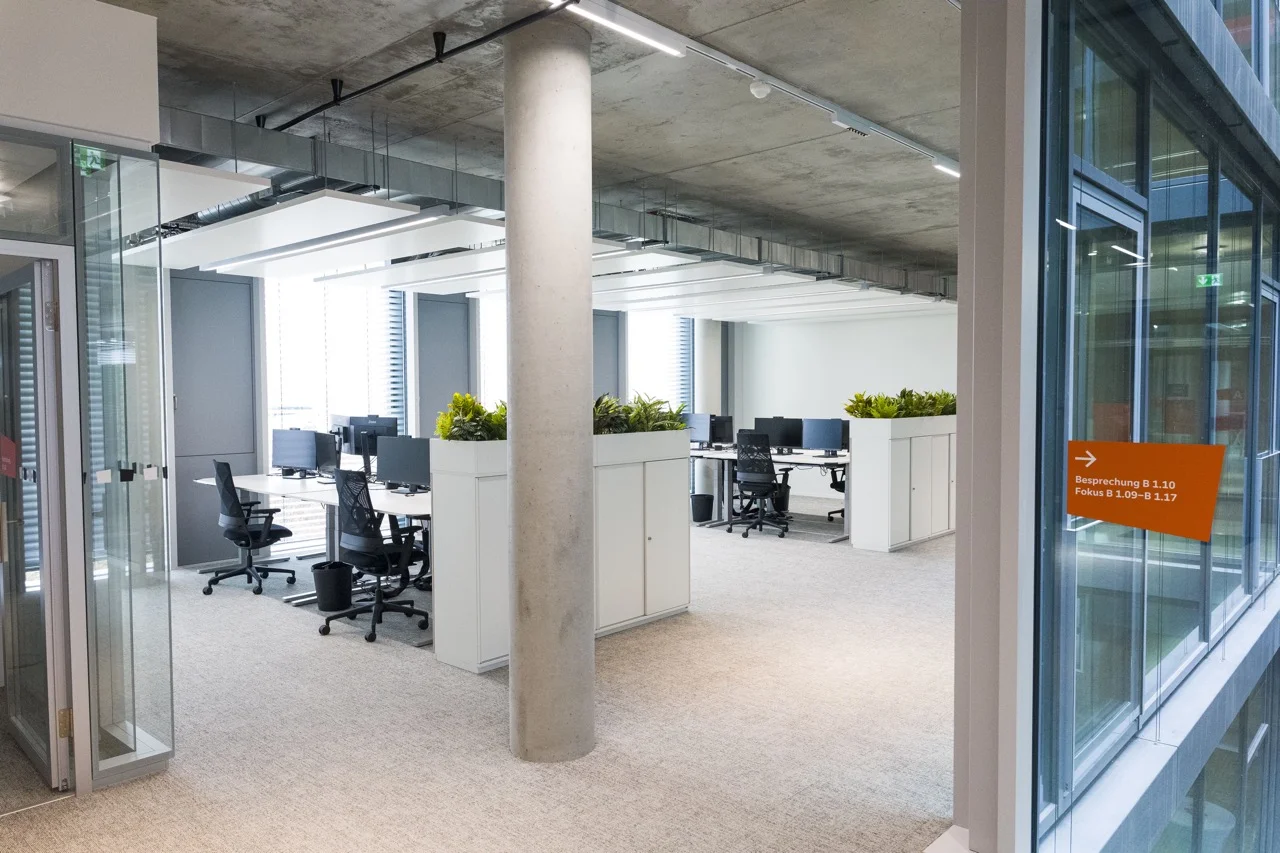
The Stuttgart Region Chamber of Crafts has around 220 employees spread across two locations. In addition to fixed workstations, there are 25 flexible desks that can be booked via the Flexopus app.
How does it work and what is the acceptance level for desk sharing? Our contact person, Peter Pfeiffer, Head of IT and Communications at the Stuttgart Region Chamber of Crafts, answered these and other questions about workplace management with Flexopus.
A brief overview of the organization: As the central representative of the skilled crafts sector in the Stuttgart region, the Stuttgart Region Chamber of Crafts supports over 32,000 businesses, from carpentry to precision engineering. In addition to representing the political interests of craft businesses in the state, the Chamber also provides them with advisory services.
The introduction of desk sharing: Modern work concepts with flexible and fixed workstations
“Due to the increasing number of employees and modern working time models, it was necessary to establish a shared-desk model in addition to a concept for mobile working,” says Peter Pfeiffer.
Hybrid working and the ability to start and end the day at different times required a smart solution for workstation booking. Ultimately, the Chamber decided to introduce desk sharing and, in the process, implemented different types of desks in their offices. The Stuttgart Region Chamber of Crafts categorizes its workstations based on usage and booking rules. This resulted in the following workstation types:
Flexible workstation: All employees can book these desks.
Fixed workstation: An employee has a permanent desk (e.g., because they work with sensitive data).
Anchor workstation: Reserved for a specific group; if not booked by a certain date, the desk is released for everyone.

Intuitive and affordable workplace management that fits the budget
In search of an affordable solution that is intuitive and easy to use, the Stuttgart Region Chamber of Crafts discovered Flexopus. They were also impressed by the uncomplicated and fast creation of floor plans by the Flexopus designers, as well as the simple administration of the software.
When introducing desk sharing, the right change communication and the implementation of an accepted clean desk policy are also crucial. At the Stuttgart Region Chamber of Crafts, the introduction of desk sharing was initially met with skepticism, but it was quickly accepted by employees thanks to modern workplace design and proper communication. Flexopus contributed to this with its user-friendly, simple interface.
The Stuttgart Region Chamber of Crafts has divided its workstations ideally for its purposes and made them bookable with Flexopus. Although Flexopus is a standard solution, it adapts to the usage and individual needs of companies. “The flexibility that Flexopus offers us here provides immense added value for our organization,” says the Chamber’s IT manager.
Tips and tricks for introducing Flexopus from the Stuttgart Region Chamber of Crafts
What was challenging during the introduction of the workplace management software and what does Peter Pfeiffer advise when introducing shared desks?
“The biggest stumbling block is employee equipment. Lockers and a uniform office and IT standard are important prerequisites.”
Pfeiffer also recommends creating a clean desk policy when introducing desk sharing, as well as planning the exact layout of the offices in advance. If the desks are equipped exactly according to work criteria, every employee can work efficiently and without worries.
What is the Chamber’s conclusion after nearly 3 years of desk sharing with Flexopus?
Peter Pfeiffer fasst die Nutzung der HWK Region Stuttgart von Flexopus in einem Satz zusammen:
“Mit Flexopus haben wir ein einfaches und effektives Buchungssystem, welches deutlich komfortabler ist als die bisherigen Outlookkalender”.
Flexopus ersetzt Microsoft 365 nicht, sondern ergänzt die bestehenden Systeme geschickt durch die Möglichkeit zur Arbeitsplatz- und Meetingraumbuchung. Außerdem bieten die Analysefunktionen in Flexopus jederzeit eine ganzheitliche Übersicht der Auslastung sämtlicher Ressourcen. So kann effizientes Gebäudemanagement betrieben werden und ungenutzte Fläche eingespart werden. Dies reduziert erheblich laufende Kosten wie die Miete und Energiekosten.

Book a live demo!
Are you interested or do you have any questions?