.jpg)
Corporate culture: definition & tips for companies
Corporate culture describes the values, norms and behaviors that shape interaction within the company. It influences decisions, collaboration and innovation. A positive culture promotes motivation, productivity and cohesion, while a toxic culture can have the opposite effect. Companies should actively shape their culture in order to be successful in the long term. Learn more about it in this article!
Table of contents
What is meant by corporate culture?
Corporate culture, by definition, describes the fundamental values, norms and behaviors that shape daily interactions within the company and forms the basis for how decisions are made, conflicts are resolved and innovations are driven forward. The culture of a company is reflected in both visible aspects such as dress codes, rituals or workplace design as well as in less obvious things such as ways of thinking, communication and leadership style. It is often confused with the corporate climate, which describes the current mood in a company.
A positive corporate culture, which can be described as the social operating system of a company, does not develop overnight, but through lived values and habits. These become entrenched over time and shape internal and external interactions.
Why is corporate culture so important?
A clearly defined and actively lived corporate culture is crucial for long-term success because it provides orientation, creates trust and strengthens the sense of community. An open corporate culture can achieve a variety of positive effects, such as:
Employee retention: When employees identify with the corporate culture, they feel more comfortable, remain loyal to the company, and are more likely to become brand ambassadors.
Productivity: Clear values help with focus and ensure efficiency and sensible prioritization of tasks.
Innovation: Ideas and a willingness to change, and thus continuous progress, are encouraged by an open corporate culture.
Reputation: Companies with a positive corporate culture are considered attractive employers and attract more potential talent.
Crisis resilience: Teams with a strong corporate culture are better able to cope with uncertain times because they stick together in difficult situations and remain better focused.
Types of corporate culture
.jpeg)
Corporate cultures can be lived very differently depending on management, industry, company history and size. The four culture types according to the Competing Values Framework (Cameron & Quinn) offer good guidance:
Clan culture:
Characterized by a strong sense of community and a family atmosphere, trust, mutual support and team spirit are central to a clan culture. Managers often see themselves as mentors or coaches who support their employees individually, and decisions are usually made jointly.
Adhocracy culture:
Companies with an adhocracy culture are flexible, dynamic and innovative. There is a high degree of risk-taking and willingness to experiment. New ideas are encouraged to quickly adapt to new market conditions. Managers often act as visionaries and initiators.
Market culture:
This corporate culture is characterized by competition, goal orientation and performance. The focus is on achieving results, working efficiently and being a market leader. Leaders act as motivators, driving their teams to achieve their best performance and recognizing and rewarding their achievements.
Hierarchical culture:
A hierarchical culture is characterized by fixed structures, clear rules and defined processes. The focus is on stability, predictability and risk minimization. Decisions are usually made at the highest levels, with particular attention paid to control and efficiency.
Each of these corporate cultures has individual advantages and disadvantages. In reality, there are often mixed forms that can change depending on the company phase, strategy or market environment. It is therefore important to constantly question your own culture and work specifically on creating a positive, productive atmosphere.
The iceberg model of corporate culture
The iceberg model of corporate culture illustrates that corporate culture – similar to an iceberg – is only directly visible to a small extent. At first glance, only the tip is visible, while the much larger and supporting part lies beneath the surface. The same applies to corporate culture: only about 10 to 20 percent are immediately perceptible, but the majority only becomes apparent at second glance.
The easily recognizable aspects include, for example:
- Clothing regulations or dress code
- Language and communication style
- Rituals such as regular meetings, shared lunches or company parties
- Logos, company colors or spatial design
These characteristics provide a first impression of how the company presents itself and how collaboration works in everyday working life.
.jpeg)
The invisible aspects, on the other hand, influence daily actions and interactions much more strongly and form the foundation of a good corporate culture. This includes:
- Values and beliefs that determine actions
- Emotional attitudes towards changes, innovations or hierarchies
- Unwritten rules and norms that influence behavior
- Interpersonal dynamics and power relations
These factors determine how decisions are made, conflicts are resolved and cooperation is practiced. The iceberg model makes it clear that an authentic and sustainable change in corporate culture cannot only be achieved on the visible level (e.g. through new logos or dress codes), but must be rooted deep in the invisible values and norms.
Examples of a positive corporate culture
But what characterizes a positive corporate culture? A positive corporate culture is primarily created by an environment that promotes the motivation, well-being and performance of employees. The following characteristics are indicators of a positive and open corporate culture:
- Trust and appreciation: Managers delegate responsibility and show recognition for good performance, which strengthens the working atmosphere.
- Open communication: Transparency promotes respect and understanding. Information is shared, problems are openly addressed and different perspectives are valued.
- Team spirit and cohesion: Collaboration and mutual support create a strong sense of community.
- Flexibility and personal responsibility: Modern companies promote flexible working models and focus on personal responsibility.
- Error tolerance and learning culture: Mistakes are seen as an opportunity to learn, which drives innovation and further development.
- Meaningfulness and value orientation: Employees know the company values and can identify with them.
- Diversity and inclusion: Different perspectives and backgrounds are seen as enriching and encouraged.
A positive corporate culture does not arise by chance, but requires consistent and collaborative action by managers and employees. Only in this way can a foundation for a successful, humane and productive working environment be created.

Examples of a toxic corporate culture
A toxic corporate culture, on the other hand, is evident in a work environment that is characterized by structures and behaviors that harm well-being and performance. Typical characteristics of a toxic culture are:
- Excessive control and mistrust: Micromanagement stifles initiative and creativity.
- Lack of or one-sided communication: Information is withheld and open discussions are avoided, which can lead to rumors.
- Lack of appreciation: Successes are taken for granted and criticism is expressed more often than praise.
- Injustice and lack of fairness: Arbitrary decisions and unfair treatment lead to frustration and dissatisfaction.
- Culture of fear and blame: Mistakes are punished and culprits are sought instead of finding solutions together.
- Low psychological safety: Employees do not dare to express their opinions or address problems.
These factors have a negative long-term impact on employee motivation, health and loyalty. Companies should recognize such patterns early on and take appropriate countermeasures.
Corporate culture at Flexopus
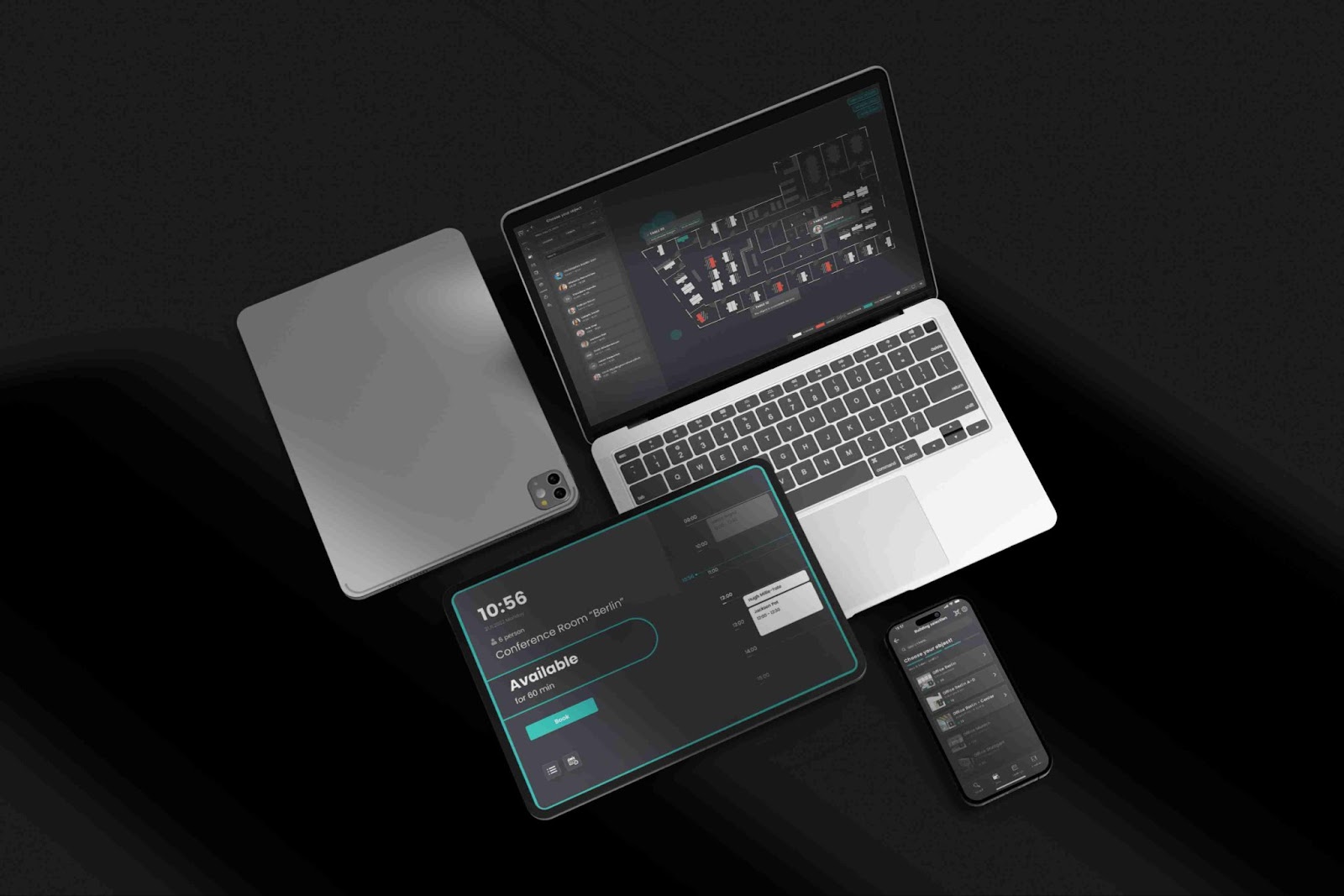
Our corporate culture at Flexopus is characterized by the values we also convey externally: flexibility, openness and true team spirit. As a young, dynamic team, we work on an equal footing and cultivate a culture of trust and open communication.
- Live flexibility: Hybrid working is a given for us – both in terms of location and time.
- Open communication: everyone is heard. Regular feedback and transparent decision-making processes are part of our everyday work.
- Teamwork: We support each other and all pull together.
- Identification with the product: We stand behind what we develop and continually improve it.
- Appreciation: We celebrate successes together and learn from setbacks.
We also incorporate these values and principles into our product: a comprehensive workplace management software that promotes flexible and hybrid working environments and helps companies establish desk sharing, efficient resource utilization, and a healthy work-life balance. Our corporate culture is the result of conscious decisions. It forms the foundation on which we grow as a team and successfully accompany our customers on their path to greater flexibility.
Tips for improving your corporate culture
To establish a positive corporate culture, daily action and reflection, open communication and lived values are crucial. Those who actively shape their corporate culture lay the foundation for success, satisfied employees, and a stable working environment.
These measures can help you build a positive corporate culture:
- Define and live values: Only lived values have an impact. Define with your team what your company stands for, communicate this consistently and lead by example as a leader.
- Targeted training of managers: Managers significantly shape the culture. Invest in modern leadership at eye level, empathy and strong communication skills.
- Encourage feedback: Create an open feedback culture with regular discussions, surveys, or anonymous tools. Make sure you take feedback seriously and implement it.
- Transparent communication: Share decisions even in difficult times. Those who know the background can contribute more effectively and feel valued.
- Establish team rituals: Weekly check-ins, digital coffee breaks, or events strengthen the sense of community.
- Make success visible: Praise good performance – be it with a thank you or a structured recognition strategy.
- Promote diversity: Different perspectives enrich the team. An inclusive culture begins with genuine openness towards different genders, ethnicities and character traits.
- Enabling hybrid working: For most people, hybrid working represents a positive work-life balance and consequently greater job satisfaction. With tools like Flexopus, you can create flexible working conditions without losing structure.
- Establish desk sharing: Modern workplace models promote exchange and personal responsibility. Flexopus helps you manage workspaces, spaces, and parking spaces efficiently and develop your culture in a contemporary direction.
We conclude: Corporate culture shapes the way we work together and significantly influences the success of a company. Shared values, leadership behavior, and practiced rituals promote cohesion, innovation, and motivation – toxic structures, on the other hand, inhibit potential. Those who actively shape corporate culture lay the foundation for sustainable success.
The most important questions summarized
What exactly makes up a corporate culture and why is it so crucial for success?

The corporate culture comprises all shared values, convictions and behaviours within an organization. It is decisive because it determines how decisions are made and how communication takes place. A positive culture acts as an emotional glue: It motivates employees, promotes innovation and creates a sense of togetherness. In times of a shortage of skilled workers, it is also a central element of employer branding — because talents are no longer just looking for a job, but an environment whose values match their own.
How is corporate culture changing as a result of modern work models such as hybrid work?
Through new work and hybrid models, culture is being separated from physical presence in the office. Trust takes the place of control. The challenge is to maintain identity and cohesion even across digital distances. Companies must find new ways to promote informal exchange — for example through conscious team events or meeting spaces in the office. A modern culture is agile and flexible; it recognizes that productivity is not tied to a location and focuses on personal responsibility and psychological safety.
Can you actively manage corporate culture or does it simply arise by itself?
Culture is always created — either by chance or by design. A healthy culture requires active management (culture design). Managers must set an example of the values (Walk the Talk). It is about creating spaces for participation and establishing feedback processes. The physical work environment also plays a role: An office that facilitates collaboration through tools such as Flexopus supports an open and modern culture. Cultural work is not a one-off project, but an ongoing process that must be constantly reflected on.
Last updated:
2026-06-15