Data sovereignty: Protection, control, and responsibility in the digital age
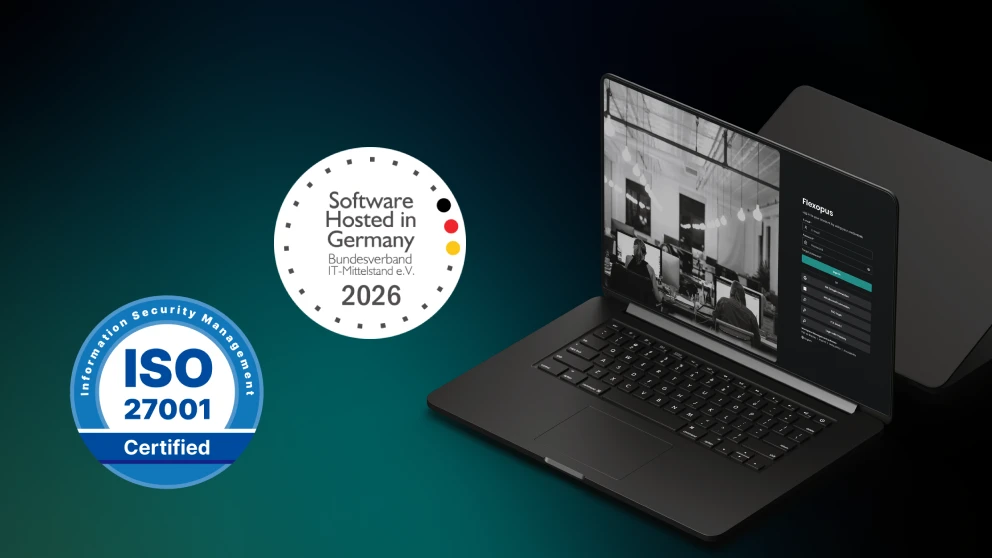
Data sovereignty means retaining control over your own data and making transparent decisions about its use and processing. Flexopus guarantees this through "Hosted in Germany," GDPR compliance, ISO 27001 certification, and "Privacy by Design & Default" to ensure data protection and security. Learn more in this article.
Table of contents
What is data sovereignty and why is it so important for companies? In an increasingly digital working world, data sovereignty plays a central role in data protection, information security, and compliance. It describes control over one's own data and the ability to determine for oneself who may access it, how it is processed, and where it is stored. Especially in hybrid work models, cloud services and digital workplace management platforms data sovereignty becomes a decisive factor for trust, transparency, and legally compliant collaboration.
What does data sovereignty mean?
Data sovereignty refers to the right and ability of individuals, organizations, or companies to determine how their own data is handled. It is about having control and freedom of choice regarding who accesses data, how it is stored, processed, or shared, and for what purposes it is used. In an increasingly digitized world, data sovereignty forms a central foundation for data protection and secure collaboration.
Why is data sovereignty important?
The digital transformation is generating ever-increasing amounts of personal data, operational information, and usage and location data. It is therefore all the more important for companies to retain control over this data. If this control is lacking, there is a risk of unauthorized access, data misuse, a lack of transparency, as well as legal and reputational risks. This also applies, for example, to the digital organization of office visits. A Visitor management software processes personal information such as names, contact details, and visit times. Companies should therefore ensure that this data is stored securely and that only authorized persons can access it. Data sovereignty ensures that sensitive information is protected, used only by authorized entities, and processed exclusively for clearly defined purposes. At the same time, it is a key prerequisite for complying with legal requirements such as the GDPR and upholding the rights of data subjects. As already mentioned, data sovereignty is becoming indispensable, especially in hybrid work models using cloud solutions like Flexopus.
Data sovereignty and modern software solutions
Modern workplace management software must not only be functional but also meet the highest requirements for data sovereignty. Users expect their data to be not only protected but also used under clearly defined conditions. This particularly concerns:
- Data storage and hosting
- Access rights and permission models
- Encryption and security technology
- Data protection-compliant processing
Control over stored information also plays an important role in the digital management of work equipment. A asset management software tracks, for example, which devices are available and which employees they have been assigned to. Clear access permissions and secure data processing are therefore crucial for protecting sensitive company and employee information.
How companies benefit from data sovereignty

Data sovereignty offers companies numerous advantages that can improve both their internal efficiency and their external perception.
Strengthening trust and security
By consistently applying data sovereignty, companies gain the trust of their employees and customers. When they can be sure that their data is protected at all times and that they have control over it, this fosters long-term relationships and strengthens brand reputation. Trust is a key factor in the digital age, and companies that take data sovereignty seriously stand out from the competition as reliable partners.
Increasing efficiency through clear data management processes
A clearly structured and sovereign approach to data helps companies make their processes more efficient. Transparent data management enables faster decision-making and simplifies risk management. By clearly assigning responsibilities and rights, the administrative burden of data processing is reduced while compliance is increased. Everyday booking processes also benefit from a responsible approach to data. A parking management software booking system processes information about parking space reservations and their users, for example. Through appropriate authorization concepts, companies can determine who is allowed to view and manage this booking data. This allows flexible workplace concepts to be combined with the requirements of data protection and data sovereignty.
The challenges of data sovereignty
Despite the many advantages, the implementation of data sovereignty also entails several challenges that companies must overcome.
Overcoming technological hurdles
Data sovereignty often requires the use of advanced technologies to store and process data securely. Companies must ensure that their infrastructure not only meets current security standards but is also future-proof. This includes encryption technologies, access controls, and secure cloud solutions that ensure data can only be used by authorized persons at all times.
Legal complexity and the need for adaptation
Continuously adapting to new data protection laws and legal requirements poses challenges for companies. Complying with the GDPR and other country-specific data protection regulations can be particularly complex for companies operating internationally. Data sovereignty requires companies to regularly review their processes and ensure that they meet the latest legal requirements at all times.
Data sovereignty at Flexopus

Data sovereignty at Flexopus
An important component of data sovereignty is the question of where data is stored, processed, and cryptographically secured. Flexopus pursues a sovereignty-oriented cloud architecture for this purpose:
Data storage and key management take place in Germany. Personal data is therefore processed exclusively within the EU.
Our platform therefore runs entirely on infrastructure in Germany – deliberately without the use of hyperscalers such as Amazon Web Services, Microsoft Azure, or Google Cloud Platform. Instead, Flexopus relies on dedicated servers at Hetzner Online GmbH to ensure maximum control over data, systems, and security processes.
Flexopus offers companies comprehensive measures to ensure data sovereignty:
- Hosting on dedicated server infrastructure in Germany
- No storage or regular processing of personal data outside the EU
- Strictly controlled and logged admin access
- TLS-secured transmission and encryption of data at rest
- Controlled key management within German infrastructure
- Clear separation between infrastructure and data access
- Data protection based on the principle of Privacy by Design & Default
- Operated on ISO 27001-certified infrastructure
- GDPR-compliant processing of personal data
Conclusion
Data sovereignty is becoming increasingly important, especially in the context of hybrid work models, cloud applications, and digital workplace management platforms. Today, companies expect not only functional software but also transparent security architectures without third-country access, traceable data processing, and maximum control over sensitive information.
Flexopus helps companies combine modern workplace concepts with high data protection and security requirements – transparently, traceably, and in compliance with the law.
The most important questions summarized
What does data sovereignty mean and why is it important?

Data sovereignty refers to the control and freedom of choice over one's own data. It is essential for protecting privacy, preventing data misuse, and maintaining legal frameworks, particularly with the GDPR. Companies must ensure they handle data transparently, have clear access rights, and manage data processing responsibly.
How does Flexopus prioritize data sovereignty?
Flexopus prioritizes data sovereignty by guaranteeing "Hosted in Germany" and meeting the highest data protection standards, such as GDPR compliance and ISO 27001 certification. The platform follows the "Privacy by Design & Default" principle, ensuring that data protection is integrated into the architecture from the start and user data is optimally protected.
Which legal and security standards does Flexopus meet?
Flexopus meets international ISO 27001 certification standards for information security and ensures that all processes are GDPR-compliant. The platform stores data "Hosted in Germany," which guarantees high security and legal clarity. With "Privacy by Design & Default," Flexopus protects its users' data comprehensively and transparently.
Last updated:
2026-11-02