Sensors & Office IoT Devices
Sensors and IoT devices allow you to automatically record the actual usage of workplaces and rooms. The data flows directly into Flexopus, creating a reliable basis for occupancy analyses and needs-based space planning.
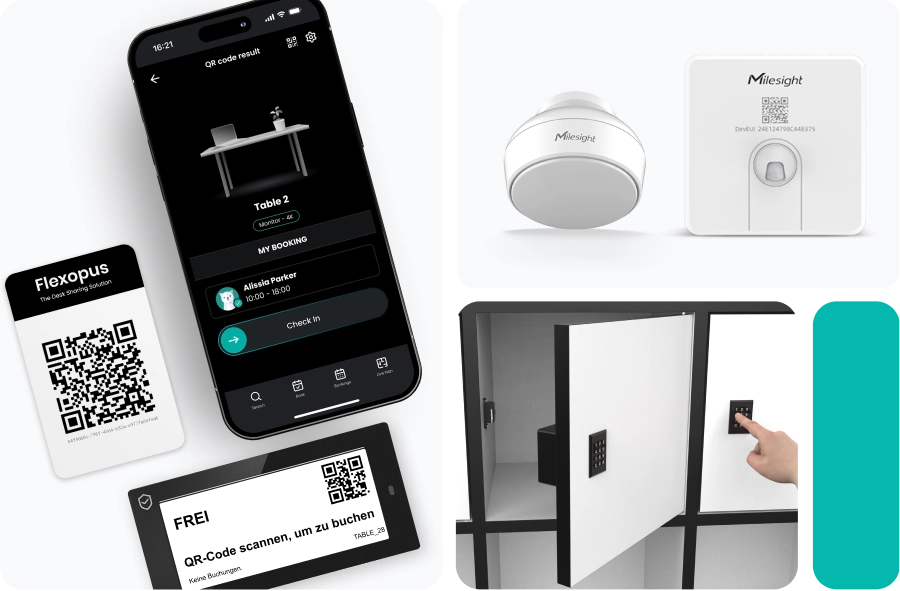
Already in use in over 4,000 offices!














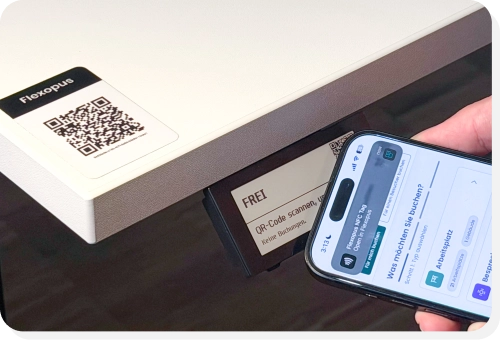
ePaper displays for workplaces
With ePaper displays, bookings are visible directly at the workplace and available seats can be quickly identified. The wireless displays can be used flexibly and enable spontaneous bookings via QR code or NFC. This makes digital workplace booking directly on site transparent and easy to use.
.webp)
Sensors for workplaces
Workplace sensors reliably detect whether a desk is actually occupied. Through motion and heat detection, real presence data is automatically transmitted to Flexopus and directly integrated into the occupancy statistics. This is how you can identify no-shows, spontaneous usage, and the actual occupancy of your workplaces.
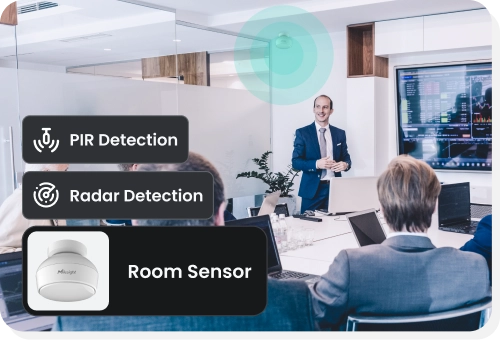
Sensors for meeting rooms
Room sensors reliably detect whether meeting rooms are actually being used. The wireless sensors can be flexibly mounted using a magnet or screw and detect occupancy via radar and PIR technology with an accuracy of up to 99%. For larger rooms, several sensors can be combined to map usage even more precisely.
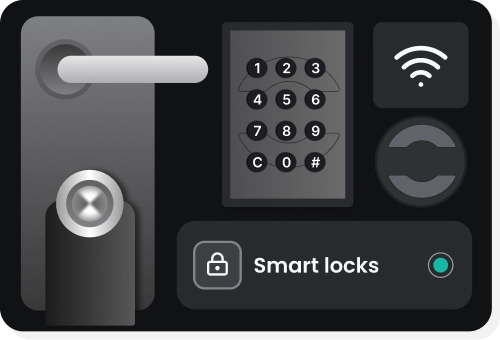
Smart Locks
With Smart Locks, you connect access and locking systems directly to Flexopus and control access digitally via a central platform. Lockers, cabinets, doors and access areas can be easily opened and managed, while permissions can be assigned flexibly. This significantly simplifies existing office processes.
.svg)
Book a live demo!
Are you interested or do you have any questions?

.svg)
Digital Signage Software
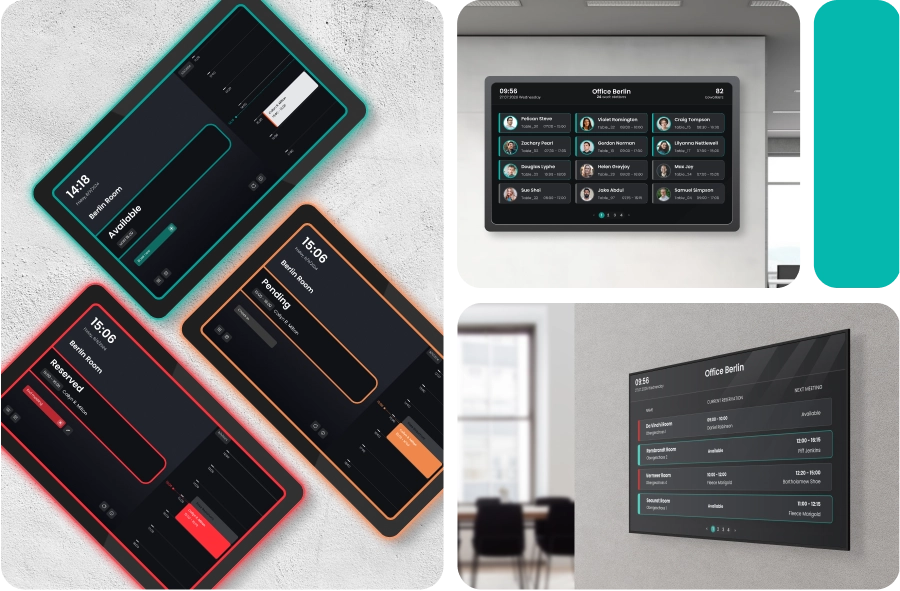
With Flexopus Digital Signage software, important information in the office is displayed directly on screens. Room displays show occupancy and enable spontaneous bookings, meeting room overviews help in the search for free rooms, the presence indicator shows which colleagues are currently in the office, and the visitor kiosk supports the digital registration of guests on site.
questions and answers
Why is it worthwhile to combine sensors and IoT devices with workplace management software?

Sensors and IoT devices supplement digital booking data with information on actual on-site usage. This gives companies a more accurate picture of the utilization of workplaces and spaces. This supports data-driven decisions, reduces unused capacity, and improves needs-based office and space planning.
What advantages do ePaper displays offer for workplace booking?
ePaper displays make the current booking status visible directly at the workplace. Employees can quickly see whether a desk is free or reserved, and depending on the configuration, can book spontaneously via QR code or NFC. The wireless displays can be flexibly integrated into existing office environments.
How do booking data and actual office occupancy data differ?
Booking data shows which workspaces or rooms have been reserved – not necessarily whether they are actually being used. Workplace and room sensors detect the actual presence on site. By comparing both data sources, companies can more accurately identify no-shows, spontaneous usage, and actual office occupancy.
Do IoT sensors for workplaces and meeting rooms require Wi-Fi or cabling?
The sensors supported by Flexopus work wirelessly and do not require power or data cables at the individual workstation. The sensor data is transmitted via a separate gateway, so the devices do not need to be directly connected to the local WLAN or company network. This also makes installation easier in existing office spaces.
