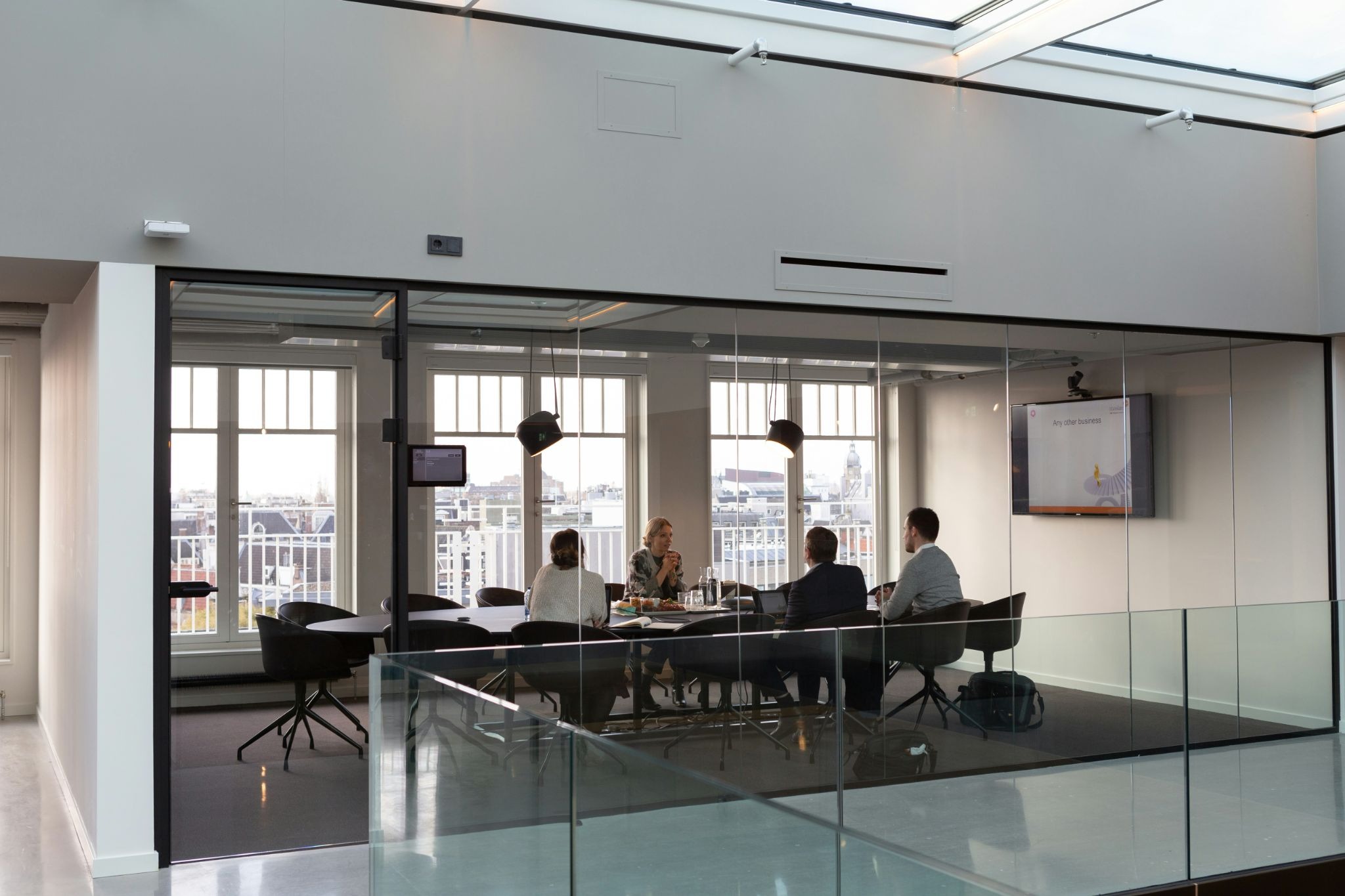
Corporate space management: How digital room management becomes a competitive advantage
Digital room management helps companies organize meeting rooms, spaces, and resources much more clearly. Modern software prevents double bookings, creates real-time transparency, provides reliable occupancy data, and reduces manual administrative effort. This turns room management into a real competitive advantage!
Table of contents
Efficient room management is far more than just maintaining a booking list – it determines whether meeting rooms, spaces, and resources in a company are truly used optimally. Those who still rely on manual processes or Excel spreadsheets lose time, money, and oversight every day compared to companies that consistently use modern room management software.
What is meant by room management?
Definition of room management in everyday business
Room management – also known as space management – refers to all processes and systems with which a company plans, assigns, and monitors its rooms, spaces, and room-related resources. The scope of complete room management includes meeting and conference rooms as well as offices, training rooms, shared workspaces, and special areas like phone booths or project rooms.
In everyday business, digital room management encompasses far more than just booking rooms: it includes managing room equipment, assigning usage rights, enforcing booking rules, and analyzing actual room usage. In short: effective office room management ensures that every room is available to the right team at the right time – without unnecessary coordination effort or wasted resources.
Modern room management software goes far beyond a simple booking interface. It connects operational booking processes with strategic insights into room usage and space occupancy – thus forming the basis for informed decisions regarding office layout and resource planning.
Typical challenges in manual room planning
Many companies know the problem from their own experience: one team reserves a meeting room via email, another enters it into an Excel sheet at the same time – and two groups end up standing in front of the same locked door for their meeting. Manual room planning and room management without software bring a whole range of structural difficulties:
- Double bookings and lack of transparency: Without a central, real-time updated booking system, no one knows reliably which rooms are occupied when. Employees send requests, wait for feedback, and often double-book – a typical problem of lacking online room management.
- High coordination effort: Office managers and secretaries spend significant parts of their working time coordinating booking requests, resolving conflicts, and manually updating changes – time that is missing for more strategic tasks in room and booking management.
- Lack of occupancy data: Without information on actual room usage, spaces are either wasted or bottlenecks arise that companies do not even notice. Which meeting rooms are used how intensively at what times? Without a booking system, this question remains unanswered.
- Inflexibility for ad-hoc needs: Anyone wanting to book a room spontaneously for a last-minute meeting often loses out with manual processes without digital room management.
- No scalable resource planning: With a growing number of employees, more locations, or additional facilities, Excel spreadsheets and email bookings quickly reach their limits.
Why digital room management saves costs and time
Switching to digital room management pays off quickly – and not just in saved administrative time. Studies on office space usage regularly show that a significant portion of booked meeting rooms are not used at all or only partially. So-called ghost meetings – bookings where no one shows up – block rooms and resources that other teams need and drive up the costs per square meter used.
Digital room management software solves this problem structurally: through real-time availability, automatic release of unused bookings via check-in functions, and clear booking rules, the share of unused space drops noticeably. At the same time, the automation of booking and management processes relieves employees and administrators – and provides reliable data for evidence-based room and resource planning. For growing companies managing multiple locations or buildings, scalable room management software is not a luxury, but an operational necessity.
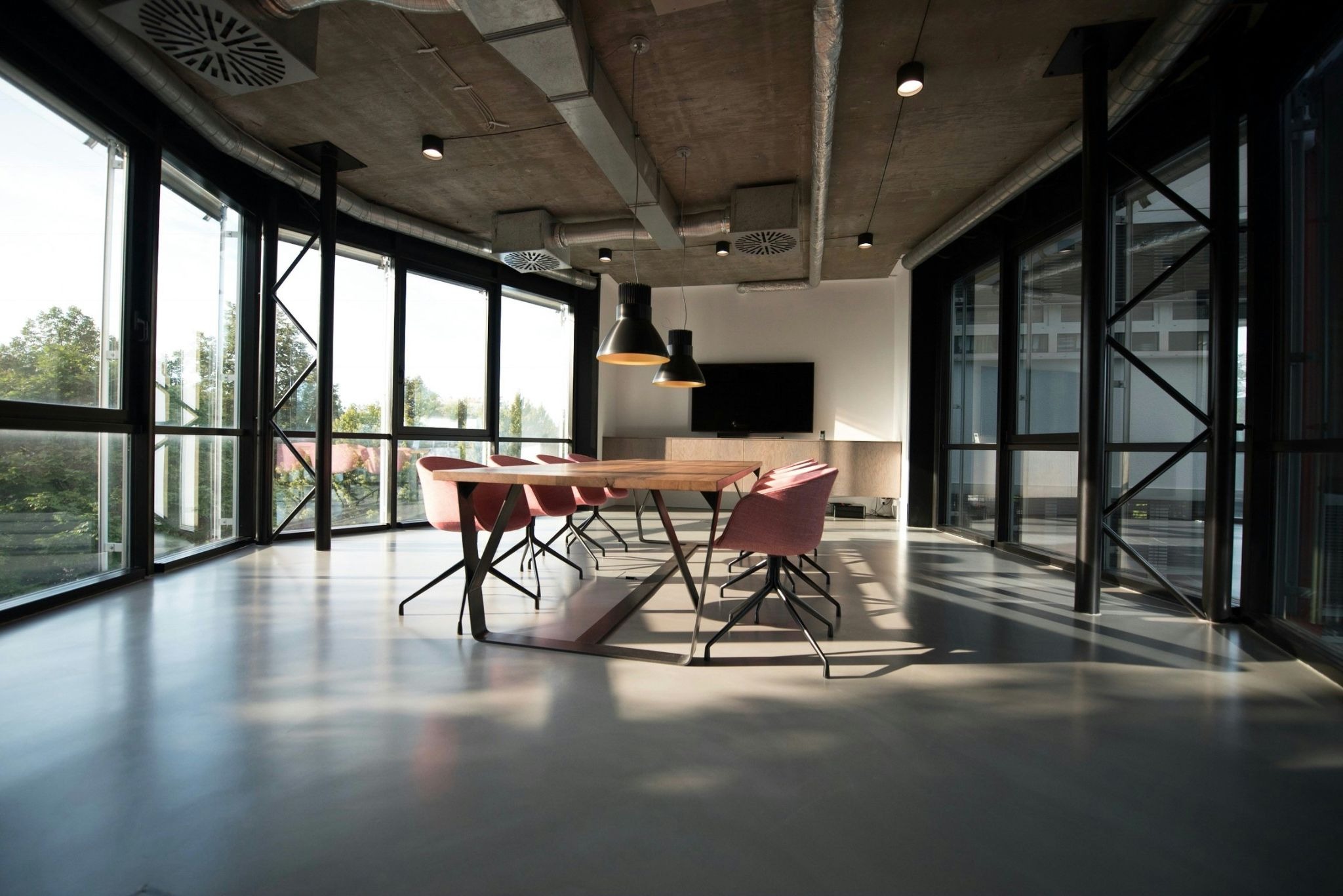
What features does modern room management software offer?
The market for room management software has evolved significantly in recent years. While earlier solutions were little more than digital booking calendars, modern software solutions for room management like Flexopus offer a complete ecosystem – from simple room booking and electronic door signs to detailed occupancy analysis and reporting on room usage.
Flexopus is an all-in-one workplace management software specifically designed for hybrid teams and already in use in over 4,000 offices. The platform allows for the centralized management of meeting rooms, workstations, parking spaces, and other resources, enabling seamless booking organization and the integration of entire room management into existing IT infrastructures. A particularly attractive feature is that Flexopus charges per resource rather than per user—a fair model that creates a transparent cost basis, especially for companies with many employees and diverse facilities.
An overview of the most important features of modern room management software like Flexopus:
- Real-time room booking: Book, cancel, and manage meeting and conference rooms with instant updates across the entire system
- Calendar integration: Bidirectional synchronization with Outlook (Exchange Online & On-Premise) and Google Calendar for a seamless booking process
- Interactive floor plans: Visualize room usage and occupancy at the floor plan level and book directly from the map
- Rights & role system: Granular role and permission management for teams, locations, and individual rooms
- Smart analytics & reporting: Detailed evaluations of room usage, space utilization, and resource planning
- Check-in / check-out: Automatic release of unused bookings to optimize room utilization
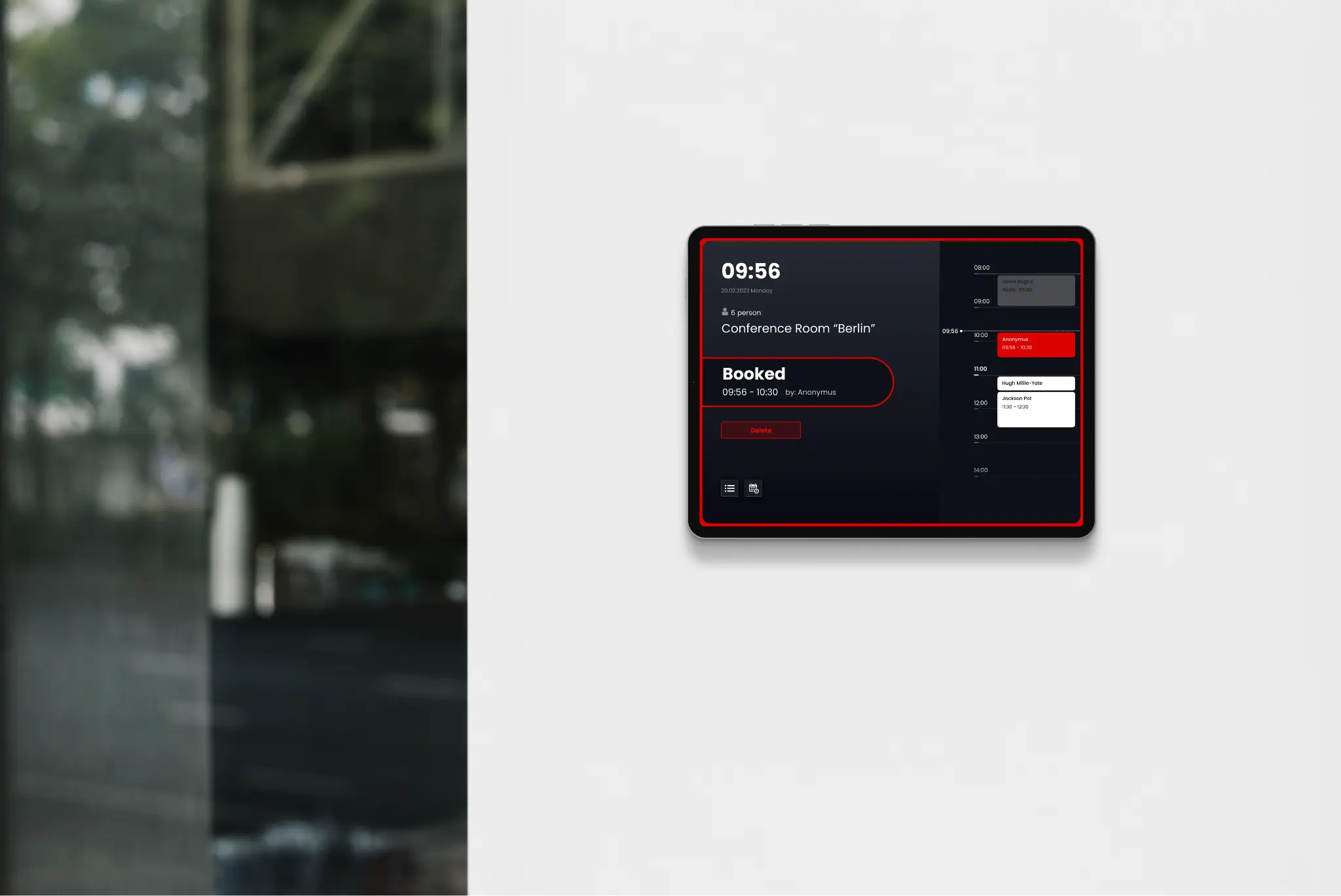
- Electronic door signs: Digital meeting room displays with LED status indicators for on-site ad-hoc bookings
- Catering & facility services: Book additional services like catering or seating arrangements directly when booking a room
- 80+ integrations: Seamless connection to existing systems, from Microsoft Teams to HRIS solutions
Calendar integration & rights and role system
A central feature of professional room management software is seamless calendar integration with existing systems. Flexopus offers bidirectional synchronization with Microsoft Exchange Online, Exchange On-Premise, and Google Calendar. This means that bookings created in Outlook or Google Calendar automatically appear in the booking system—and vice versa. Cancellations and changes are transferred immediately, structurally eliminating the possibility of double-booking rooms.
Furthermore, the Outlook add-in allows for direct room booking from the familiar email environment, so employees do not need to switch between different applications to make a booking. Calendar integration is therefore one of the most frequently used features in daily room management.
Just as important as calendar integration are differentiated user rights and approval processes. Powerful online room management software allows you to define exactly who is permitted to book, manage, or view which rooms—at the level of individual users, teams, or locations. Flexopus provides a granular role and permission system for this purpose, allowing administrators to individually configure booking rules, lead times, and maximum booking durations.
For companies that want to restrict access to sensitive rooms to specific groups, such control options in room management are indispensable. The combination of calendar integration and user rights management creates a consistent, largely automated booking process with minimal coordination effort.
Evaluations, reporting, and transparency regarding room usage
Data is the foundation of good decision-making—this is especially true for room management. Modern room management software provides not only operational booking functions but also meaningful evaluations and reporting on actual room usage and occupancy.
With its smart analytics, Flexopus provides detailed insights: Which rooms are used to what extent and when? Which meeting rooms are booked regularly but not used? How is space utilization and occupancy trending over weeks and months? This room usage data can be visualized via interactive floor plans and used as a basis for decisions regarding office layout, the number of rooms, or opening hours.
Transparency regarding room usage is not just a topic for corporate management: team leaders, room managers, and office managers also benefit from being able to see at a glance which resources and rooms are available—and which are structurally over- or underutilized. Good reporting makes room management measurable and manageable.
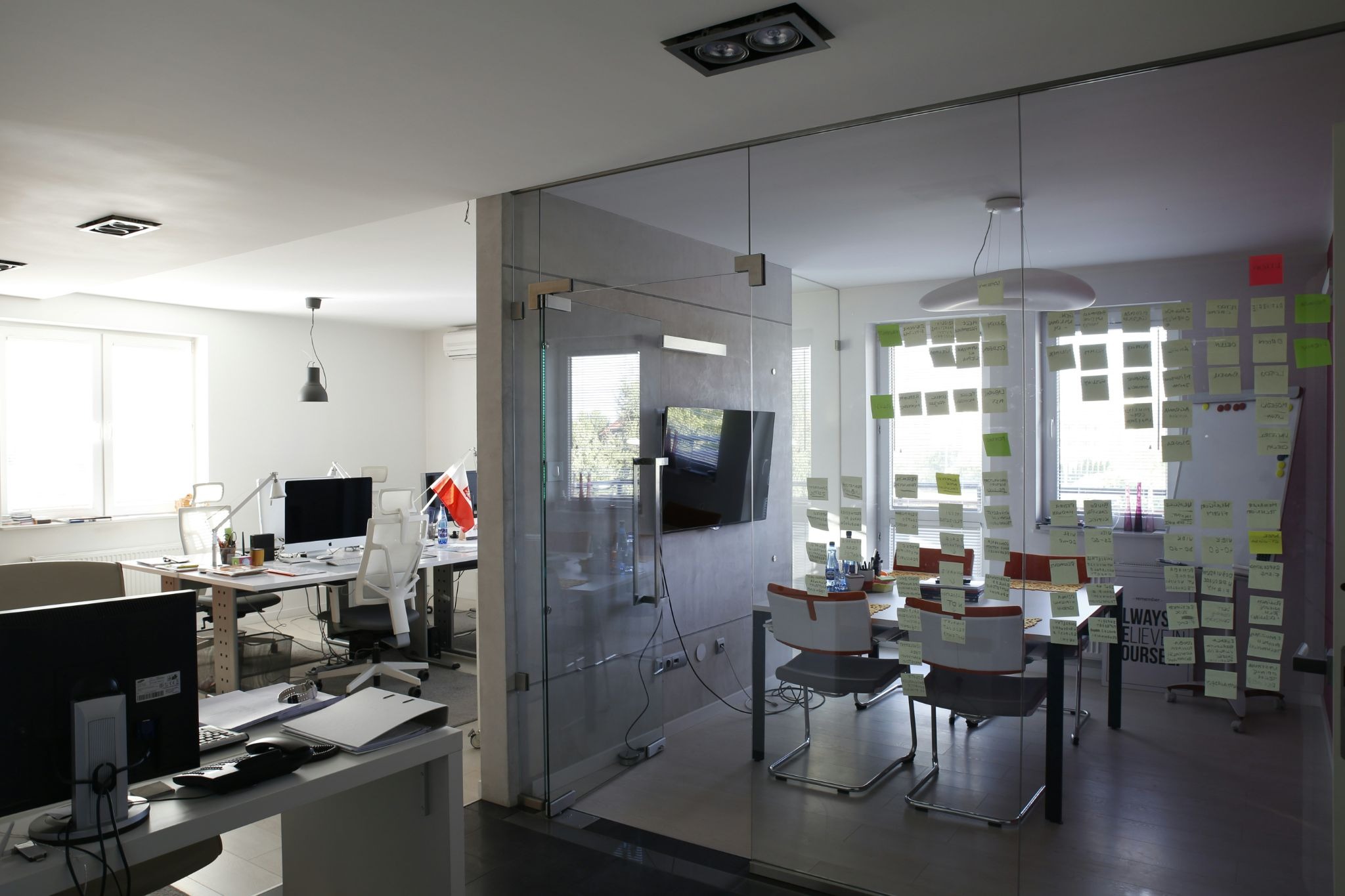
What advantages does room management software offer over Excel or manual processes?
Fewer double bookings and reduced coordination effort
The most obvious advantage of professional room management software—whether as an online room management or on-premise solution—over Excel or email-based processes is the structural prevention of double bookings. Since all bookings are recorded in real-time in a central booking system and synchronized with connected calendar applications, overlaps when booking rooms are technically impossible.
This not only reduces frustration among employees but also significantly lowers the coordination effort. Office managers no longer need to conduct manual inquiries, resolve conflicts via email, or maintain booking lists in Excel. The booking system handles administration and organization automatically—reliably, seamlessly, and without human error.
Better overview of availability in real-time
Excel spreadsheets are only as current as their last manual update. A room management booking system shows availability and occupancy in real-time—both on interactive floor plans and in a classic calendar view. Employees can see at a glance which meeting room is free, what equipment it offers, and how large it is—without inquiries and without waiting time.
Flexopus goes a step further: the integrated meeting room finder allows available rooms to be filtered by capacity, equipment features (projector, whiteboard, video conferencing technology, etc.), and location. This allows every team to find the right room for their meeting in seconds—a tangible gain in the daily use of room management.
For spontaneous meetings, Flexopus enables ad-hoc bookings directly via the app or the electronic door signs at the room entrance—no PC, no waiting time, and no detours through booking management.
Benutzerfreundlichkeit und einfache Einführung im Team
Selbst die beste Raumverwaltung Software nützt wenig, wenn sie im Alltag nicht angenommen wird. Benutzerfreundlichkeit ist daher ein entscheidendes Kriterium bei der Wahl einer geeigneten Softwarelösung für Raummanagement. Flexopus setzt auf eine intuitive Oberfläche, die ohne lange Einarbeitungszeit auskommt: Räume buchen funktioniert in drei Schritten – Zeitraum wählen, Standort auswählen, Raum im Grundriss buchen.
Das schnelle Onboarding ist dabei kein Zufall, sondern Designprinzip: Flexopus ist so entwickelt, dass die digitale Raumverwaltung innerhalb kürzester Zeit einsatzbereit ist. Für Administratoren stehen umfangreiche Konfigurationsmöglichkeiten zur Verfügung – für Endnutzer bleibt die Buchungsoberfläche so einfach wie möglich.
Ergänzt wird die Benutzerfreundlichkeit durch eine native Mobile App (iOS und Android), die das Buchen und Verwalten von Räumen sowie die Nutzung weiterer Funktionen auch unterwegs ermöglicht.
Schnittstellen zu bestehenden Systemen und technische Integration
Ein häufiger Einwand gegen den Wechsel auf eine neue Raumverwaltungssoftware lautet: „Das passt nicht zu unserer bestehenden IT-Infrastruktur." Bei einer professionellen Buchungssoftware wie Flexopus ist das kein Problem – im Gegenteil.
Flexopus bietet über 80 Integrationen, darunter Microsoft Exchange Online und On-Premise, Microsoft Outlook Add-In, Google Calendar und Microsoft Entra ID (Azure Active Directory) für Single Sign-On und SCIM-Benutzerprovisioning sowie eine REST API für individuelle Anbindungen. Für Unternehmen, die bereits stark auf Microsoft 365 setzen, ist auch eine vollständige Microsoft Teams-App verfügbar, die Raumbuchungen direkt aus dem Chat ermöglicht.
Darüber hinaus unterstützt Flexopus IoT-Integrationen mit smarter Hardware wie Belegungssensoren und digitalen Türschildern von Anbietern wie ELO und ProDVX. Diese Kombination aus Raumverwaltung Software und Hardware ermöglicht ein vollständiges Smart-Office-Erlebnis – von der Buchung über das Ressourcenmanagement bis zur physischen Raumöffnung über Smart Locks.
Die technische Integration ist damit kein Hindernis, sondern ein Hebel: Je besser die Raumverwaltungssoftware in bestehende Systeme und Einrichtungen eingebunden ist, desto höher ist der Mehrwert der digitalen Raumverwaltung für alle Beteiligten.
Datenschutz, Support und individuelle Anpassungsmöglichkeiten
Für Unternehmen im DACH-Raum ist Datenschutz bei der Wahl einer Software-Lösung für Raumverwaltung ein entscheidendes Kriterium. Flexopus wird Hosted in Germany – auf dedizierten Servern der Hetzner Online GmbH – und ist vom TÜV Rheinland nach ISO 27001 zertifiziert. Das bedeutet: geprüfte Informationssicherheit, volle Datensouveränität und Einhaltung aller DSGVO-Anforderungen beim Umgang mit Buchungs- und Nutzungsdaten.
Beim Support geht Flexopus einen persönlichen Weg: Kein Ticketsystem mit langen Wartezeiten, sondern ein engagiertes Team, das als direkter Ansprechpartner für alle Fragen rund um die Raumverwaltung bereitsteht. Auf G2 erreicht Flexopus eine Bewertung von 4,9 Sternen – mit besonderem Lob für die Qualität des Supports.
Was individuelle Anpassungsmöglichkeiten betrifft, bietet Flexopus granulare Einstellungen auf allen Ebenen: von standortspezifischen Buchungsregeln und Freigabeprozessen über benutzerdefinierte Raumattribute bis hin zu individuellen Rollenkonzepten und der Verwaltung von Eventlocations. Das macht die Raumverwaltung Software skalierbar und flexibel – ob für ein Büro mit 20 Mitarbeitenden oder ein internationales Unternehmen mit mehreren Standorten und vielfältigen Einrichtungen.
Fazit: Raumverwaltung als strategisches Thema
Wer Raumverwaltung als reine Verwaltungsaufgabe betrachtet, unterschätzt ihr Potenzial. Moderne, digitale Raumverwaltung Software wie Flexopus verbindet operative Effizienz mit strategischer Transparenz: Sie eliminiert Doppelbuchungen, optimiert die Raumnutzung, reduziert den Verwaltungsaufwand im Buchungsmanagement, liefert belastbare Daten zur Belegung und Ressourcenplanung und integriert sich nahtlos in bestehende Systeme – bei vollem Datenschutz und persönlichem Support.
Für Unternehmen, die hybrides Arbeiten ernst nehmen und ihre Besprechungsräume, Flächen und Raumressourcen wirklich optimal nutzen wollen, ist die Einführung einer professionellen Raumverwaltung Software kein optionales Upgrade, sondern ein entscheidender Schritt in Richtung modernes Raummanagement und effizientes Workplace Management.
The most important questions summarized
What are the benefits of digital room management compared to Excel or email?

Digital room management creates a central, real-time updated overview of all rooms and bookings. This prevents double bookings, significantly reduces the need for coordination, and makes spontaneous bookings easier. Companies save time, reduce error rates, and use their spaces more purposefully and economically.
Which features make modern room management particularly effective?
Real-time booking, calendar integration, interactive floor plans, check-in/check-out, rights management, and analyses of actual usage are crucial. This allows rooms to not only be booked but also managed strategically. Companies can identify more quickly which spaces are in demand, where vacancies arise, and how resources can be planned better.
Why is space management a competitive advantage today?
Because it combines operational efficiency with better decision-making. By effectively analyzing space data, you can optimize floor plans, reduce costs, and professionally support hybrid work models. Modern solutions like Flexopus also integrate into existing systems, improve the user experience, and create a foundation for scalable workplace management.
Last updated:
2026-10-07