
Flexwork: Definition and benefits
Flexwork represents a new way of working: flexible, digital, and adaptable. Discover how companies are shaping the future of work with hybrid models, modern workplace design, and digital solutions.
Table of contents
Flexwork refers to flexible working models where employees have a say in when, where, and how they work. This includes hybrid work, home office, remote work, and flexible working hours. The goal is to organize work in a way that suits both the needs of the employees and the requirements of the company.
What is flexwork?
The term is a combination of "flexible" and "work." It describes the shift from a fixed workplace with set hours to an adaptable way of working.
Flexwork encompasses three dimensions:
- Flexible work location: Depending on the task, employees work in the office, from home, or from another location.
- Flexible working hours: Models such as flextime or trust-based working hours replace rigid schedules.
- Flexible work organization:Teams structure collaboration and processes to be more digital and agile.
Flexwork does not mean that everyone works completely independently of one another. Flexible working models only function with clear rules, digital tools, and a suitable corporate culture.
What forms of flexwork are there?
Hybrid work
Hybrid work combines the office and mobile working. The office is used specifically for collaboration, meetings, and face-to-face interaction.
Example: A team works remotely three days a week and meets in the office on two fixed days. This leaves time for focused individual work and personal coordination.
Remote Work
Remote work is location-independent work outside the office, either permanently or temporarily. This form focuses on the flexibility of the work location.
Flexible working hours
Employees adapt their working hours to their tasks and personal needs. Common models include:
- Flextime
- Trust-based working hours
- Part-time work and job sharing
- 4-day work week
Flexwork vs. home office: What is the difference?
The terms are often used interchangeably, but they do not mean the same thing. Working from home is a place of work, while Flexwork is an overarching concept.
Home office is therefore one component of Flexwork. Most companies combine several flexible forms of work.
What are the benefits of Flexwork?

Employee benefits
- less commuting time
- better work-life balance
- more autonomy in everyday work
- the right work environment for every task
Benefits for companies
- higher employee satisfaction
- greater appeal as an employer
- Access to a larger talent pool
- more efficient use of office space
What challenges does flexible work bring?
- Collaboration: Teams need clear communication guidelines and digital tools to ensure information is accessible regardless of where they are working.
- Corporate culture: When people see each other in the office less frequently, they need intentionally created opportunities for interaction.
- Office organization: When not everyone is on-site every day, the requirements for workstations, rooms, and resources change.
Examples of flexwork in the company
What role does workplace management play in flexible work?
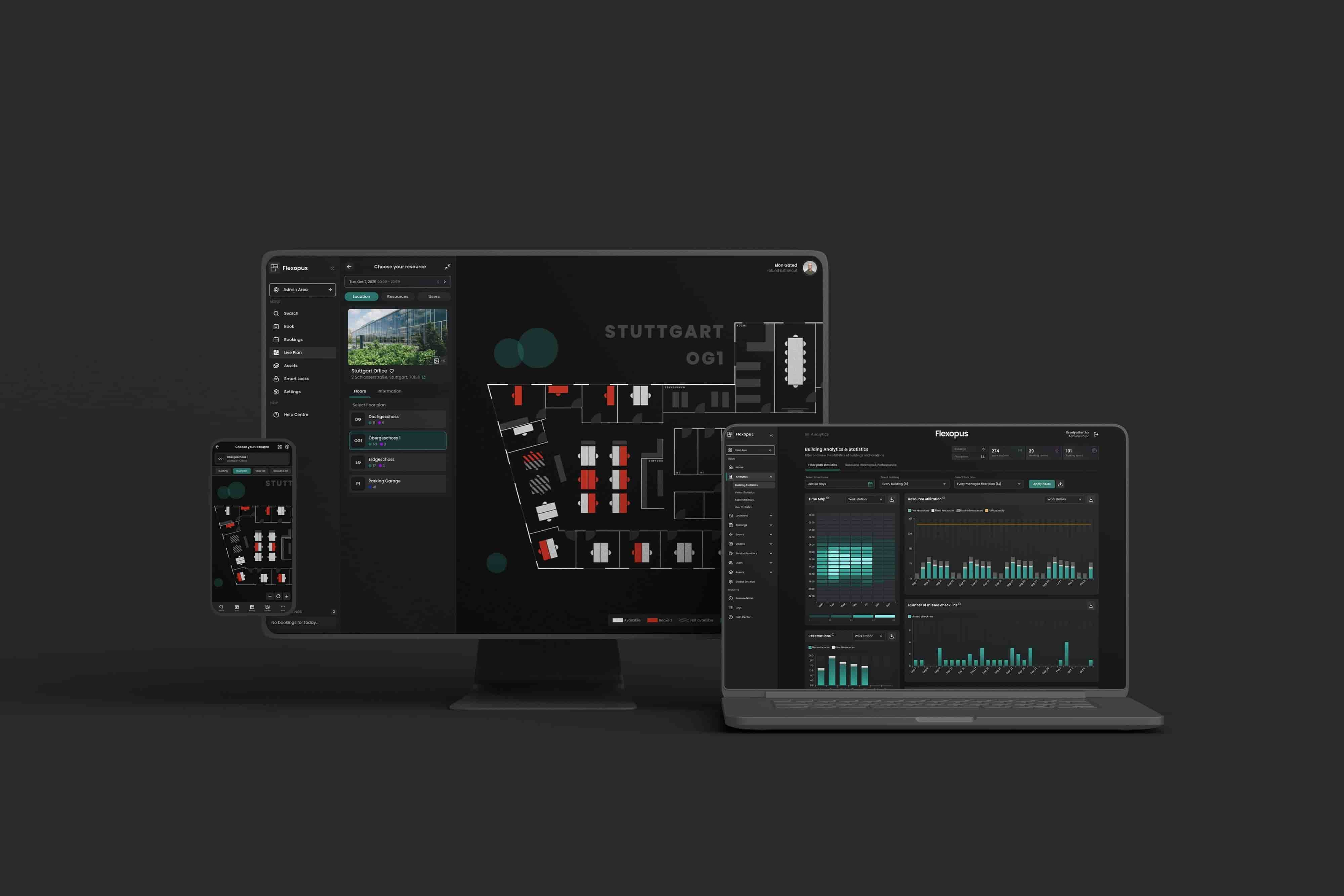
Flexible work fundamentally changes how offices are used. Companies need solutions that allow employees to flexibly organize workstations, rooms, and other resources.
A workplace management software helps companies implement flexwork efficiently.
Typical features include:
- Desk booking
- Room booking
- Parking management
- catering and facility services
- Asset management
- Visitor management software
This allows employees, for example, to book a suitable workspace before their day at the office or see which colleagues are also on-site.
At the same time, companies receive valuable data on how spaces are actually used and can optimize their office planning more effectively.
Conclusion
Flexwork is more than just working from home. The concept encompasses the entire organization of work: location, working hours, and the use of office space. For it to be successful, companies need clear rules, digital solutions, and an office environment designed for flexible use.
The most important questions summarized
What are the benefits of flexwork for companies and employees?

Flexwork gives employees more autonomy, a better work-life balance, and more flexibility in their daily lives. Companies benefit from higher employee satisfaction, more attractive working conditions, and a better alignment of their workspaces with modern requirements.
What role does workplace management play in flexible work?
Workplace management helps companies successfully implement flexible working models. Digital solutions assist in organizing workstations, rooms, and resources, provide transparency regarding office space utilization, and allow employees to easily plan their days in the office.
What is the difference between flexwork and working from home?
Flexwork is a more comprehensive concept than working from home. While working from home refers exclusively to working from a residential location, flexwork encompasses various flexible working arrangements such as hybrid work, remote work, and flexible working hours. The focus is on better adapting the place, time, and organization of work to the needs of both employees and companies.
Last updated:
2026-11-13