
New Work Office: How modern office concepts are changing the working world
The concept of the New Work Office is changing the world of work by breaking up traditional office structures and creating a flexible, technology-based work environment. It promotes a culture of collaboration and supports the needs of employees in a modern, digital working world. Learn more about the New Work office in this article.
Table of contents
Digitalization, new employee expectations and changing business models mean that companies are increasingly looking at new ways of working. The classic workplace with fixed desks, fixed working hours and clear hierarchies is becoming less and less suited to the requirements of modern organizations.
As a result of these changes, the concept of the New Work Office is becoming more and more relevant. This is not just about modern office design, but about a holistic concept that combines working methods, corporate culture, work environment and technology.
A New Work office is therefore more than just a beautifully designed office. It is a place of work that focuses on people's needs, allows flexibility and promotes team productivity. Depending on their tasks, employees can switch between different rooms, workplaces and forms of work — from Home office from collaborative areas to quiet focus zones.
Typical goals of a new work office are:
- more flexibility in everyday work
- higher employee satisfaction and improved well-being
- Promoting exchange, communication and creativity
- better space efficiency in the office
- better adaptation to hybrid working methods
Many companies combine this office concept with digital solutions to make workplaces, meeting rooms or parking spaces flexibly bookable. This allows office space to be managed efficiently and employees can select their workplace according to their daily requirements.

Typical elements of a new work office
A modern new work office consists of various components. These include:
- flexible workplaces and desk sharing
- Different room types for different tasks
- Focus areas for concentrated work
- Collaboration zones for teams
- Creative spaces for workshops and innovation
- Social areas for informal exchange
- Digital tools for managing workplaces and spaces
- technologies to support hybrid collaboration
- Ergonomic and flexible office furniture
- Visitor, inventory, and workplace management solutions
These elements show that the New Work office is not a single piece of furniture or a special interior design, but a comprehensive office concept that adapts the workplace to the modern working world.
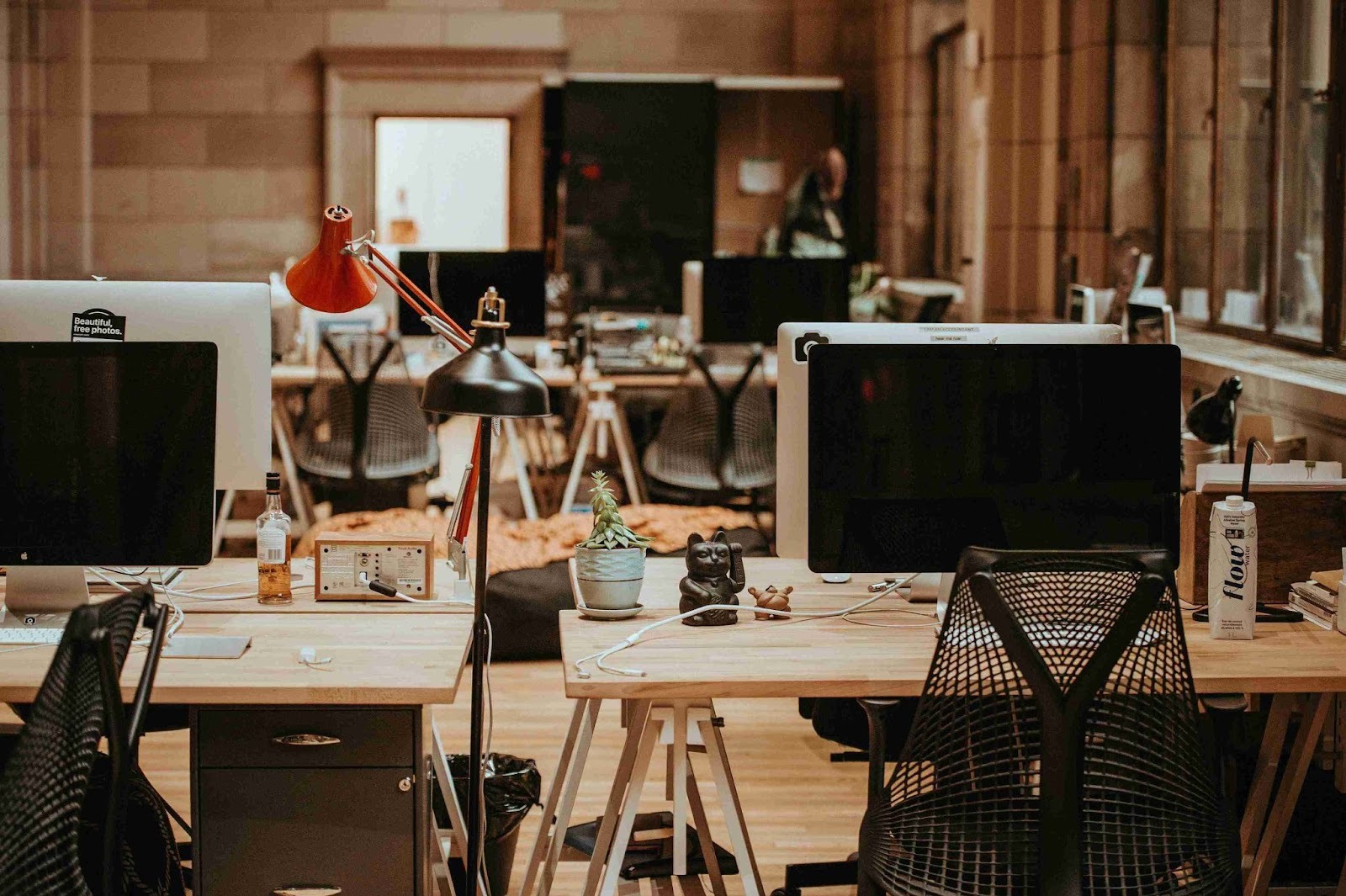
What is a New Work office?
A New Work office describes a modern work environment that is based on the principles of the New Work movement. The aim is to design work in such a way that it better suits the needs of people, teams and companies.
The term New Work goes back to the social philosopher Frithjof Bergmann. His idea was to rethink work and bring more self-determination and meaning to everyday working life. In the context of modern office concepts, this means in particular:
- more flexibility at the place of work
- more freedom in designing the way of working
- greater integration of technology
- more focus on employee satisfaction and wellbeing
A new work office is therefore significantly different from classic open-plan offices or traditional individual offices. Instead of fixed desks, there are often flexible workstations that can be used as needed. Employees choose their job depending on their task, team or personal preference.
The work environment is deliberately designed in such a way that different forms of work are possible: concentrated work, creative collaboration, spontaneous encounters or digital meetings.
For companies, a New Work office also means a strategic adjustment to the changing world of work. New office design and flexible office space help to meet the increasing demands of modern working methods.
What is the difference between a new work office and a co-working space?
At first glance, New Work offices and co-working spaces look similar. Both rely on flexible workplaces, open spaces and collaborative work. However, there are important differences.
A co-working space is usually an external place of work that is shared by various companies, freelancers or start-ups. The focus here is primarily on exchange between different organizations.
A New Work office, on the other hand, is part of an individual company and is specifically tailored to its teams, processes and working methods. The design is based on the company's own corporate culture, the daily tasks of employees and the individual requirements of the organization.
Co-working spaces offer flexible workplaces for several companies, a New Work office often goes much further. It integrates:
- customized office concepts
- digital tools for workplace management
- hybrid meeting rooms
- specific areas for creative collaboration
- flexible use of office space
The focus is therefore not only on flexibility, but on a holistic working environment that promotes productivity, creativity and communication within the company.
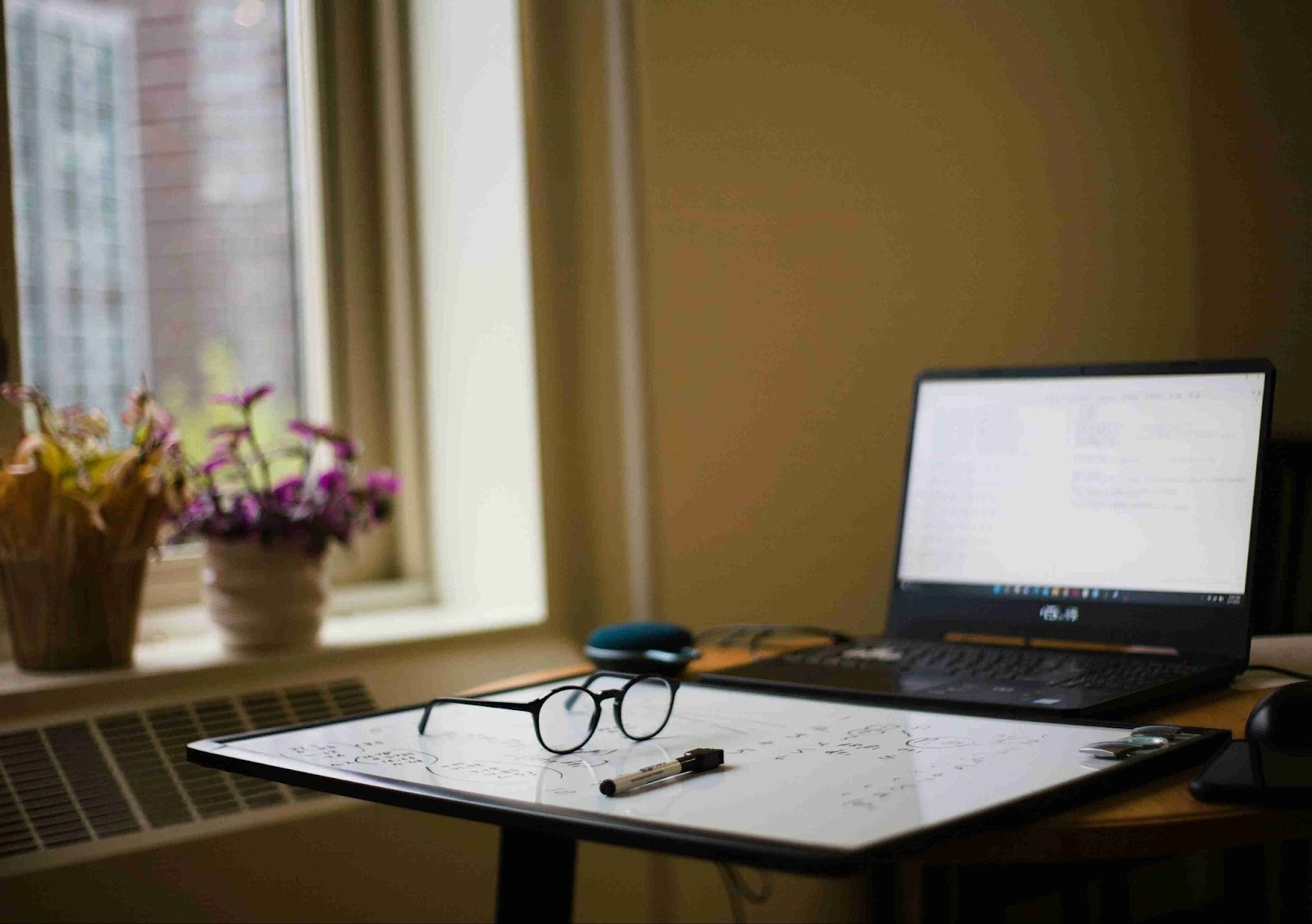
The new work concept in the office
A New Work office is based on several central principles, which together enable a modern way of working. These principles shape the design of the work environment, the organization of teams, and the use of technology in the office.
1. Flexibility
Workplace flexibility is one of the most important features of a new work office. Employees should no longer be tied to a fixed workplace or a specific location.
Many companies therefore rely on flexible workplaces and desk sharing. Every day, employees choose the right place to work — depending on the task, team or personal preferences.
Typical forms of flexibility include:
- Combination of home office and office work
- flexible working hours
- different workplaces in the office
- project-based collaboration in changing teams
2. Collaboration
Another central component of the New Work concept is the promotion of collaboration. Modern office concepts deliberately create spaces that enable exchange, spontaneous encounters and collaboration.
Open collaboration areas, creative workshop rooms, and hybrid meeting rooms promote communication between teams and departments.
This environment supports:
- creative idea development
- rapid exchange of knowledge
- interdisciplinary collaboration
- agile project work
3. Employee orientation
Employees are at the center of a New Work office. Their needs, well-being and individual working methods play a central role in designing the work environment.
Companies take various factors into account:
- ergonomic workplaces
- quiet areas for concentrated work
- flexible retreats
- social zones for informal exchange
4. Technology
Digitalization is a central driver of the New Work Office. Modern technologies enable new forms of communication, collaboration and organization of work.
Digital tools help companies to:
- to organize hybrid collaboration between home office and office
- Easy to manage workstations and meeting rooms
- Making better use of office space
- to automate administrative processes
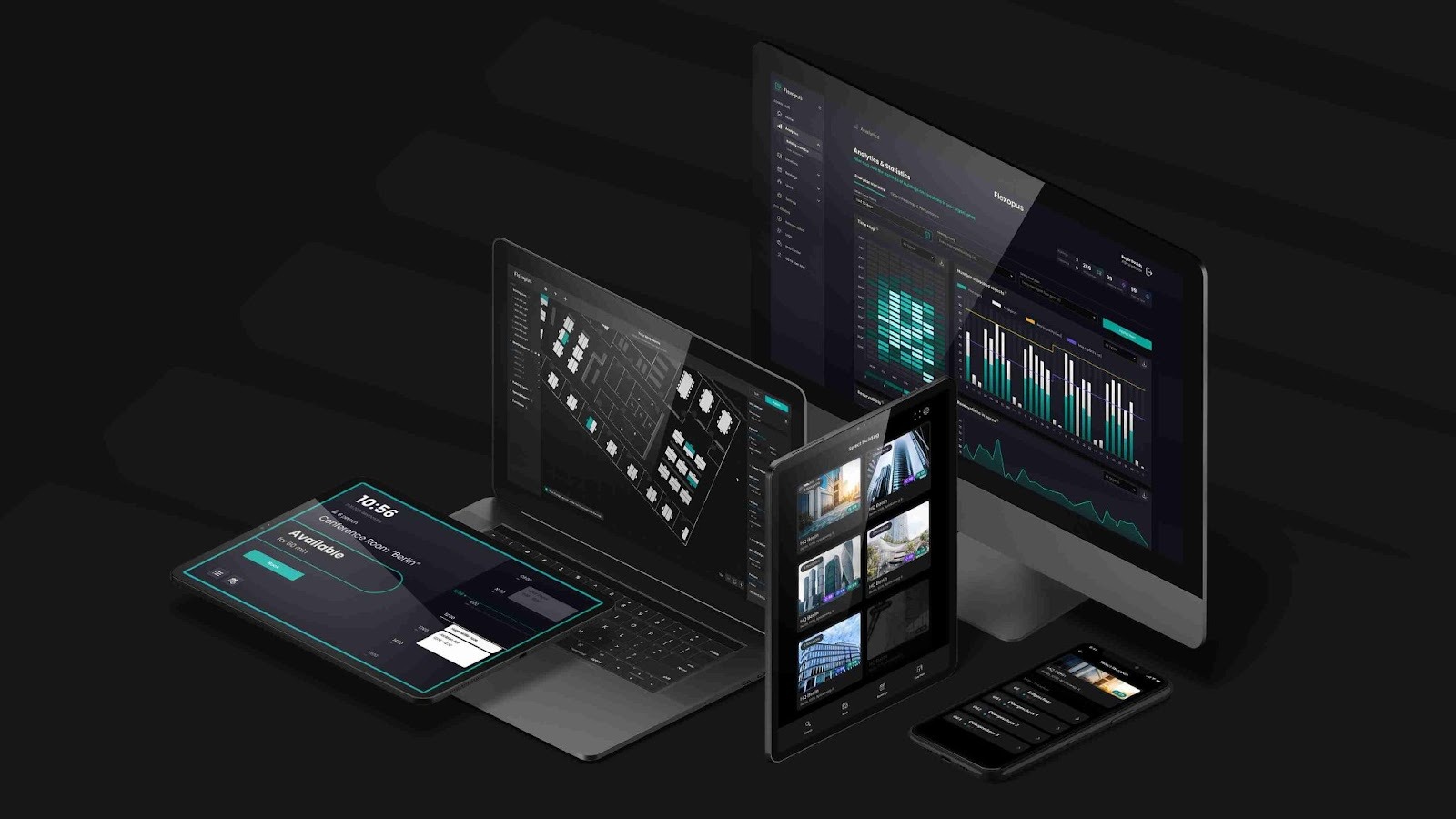
The role of digital tools in the New Work office
Increasing digitization is not only changing business processes, but also the organization of offices. Especially in flexible office concepts, technology is a decisive factor for efficiently managing the work environment.
When employees no longer have fixed desks, workplaces, meeting rooms, or parking spaces must be easy to book. This is the only way teams can flexibly plan where they want to work.
Digital workplace management systems enable just that. They help companies:
- Office workplaces to book
- Meeting rooms to reserve
- Managing parking spaces
- Register visitors digitally
- Organize work tools and assets
One solution for such requirements is, for example, the Flexopus workplace management platform. With tools such as a desk booking software, room booking software, parking management software, or visitor management software, companies can strategically manage their office space and support flexible working methods in the New Work office.
Especially in hybrid work models, such a platform ensures that teams can see at any time who is working in the office, which rooms are available, and where collaboration is taking place.
New work office design
A successful New Work office is not created by chance, but through a conscious design of the entire work environment. The aim is to create an office concept that takes into account the different needs of employees and supports various forms of work. This is not just about a modern look, but above all about functionality, flexibility, and a well-thought-out use of existing office space.
The focus is on the question of how the office must adapt to today's working world. Because a modern New Work office should not only offer space to work, but also enable exchange, creativity, concentrated work, and social encounters. Depending on the company, teams, and tasks, the requirements for rooms, furniture, infrastructure, and technical equipment vary significantly.
Contemporary office design, therefore combines different zones and functions. It creates a workplace that is suitable both for collaborative processes and for individual focus phases. At the same time, such a concept must fit the respective corporate culture and actively support the desired way of working.
Conclusion
The New Work office is a central part of the modern working world. It combines flexible working methods, innovative office concepts and digital technologies to create a new way of working.
For companies, this concept offers numerous advantages: better use of office space, higher employee satisfaction, better collaboration in teams and more productivity.
At the same time, the transition to a new work office is also a challenge. Organizations must adapt their corporate culture, way of working and office design to meet new requirements.
If this transformation is successful, a work environment is created that meets both the needs of people and the goals of modern companies — and thus actively shapes the future of work.
The most important questions summarized
What is a New Work office?

A New Work office is a modern work environment that combines flexibility, collaboration, and technology. It breaks with traditional office structures and promotes a culture that is tailored to the needs of employees. Flexible workplaces and digital tools are used to increase efficiency and satisfaction.
What are the benefits of a New Work office for companies?
For companies, a New Work office offers efficient use of office space, which can lead to cost reductions. At the same time, it increases employee satisfaction and promotes an agile way of working that meets the challenges of hybrid work models. The use of digital tools optimizes workplace management and increases flexibility in everyday working life.
How does the New Work office promote collaboration?
The New Work office creates open spaces for creative exchange and promotes collaboration through hybrid meeting rooms, collaborative zones and flexible workplaces. There are both silent zones for concentrated work and areas that enable dialogue between employees. This office design supports interdisciplinary collaboration and increases team productivity.
Last updated:
2026-06-12