
Artificial Intelligence
Artificial intelligence (AI) enables machines to solve tasks similar to humans. Machine learning is a preliminary stage in which data patterns are recognized and predictions are made. There is weak AI, which performs specific tasks, and strong AI, which does not yet exist. AI is simulated by artificial neural networks and learns through machine learning.
AI is used in a variety of ways in companies: for quality control in production, driverless vehicles in logistics, product recommendations in marketing, sales forecasting in the supply chain, inventory optimization, recruiting, and automatic scheduling.
Die wichtigsten Fragen zusammengefasst
Was ist Künstliche Intelligenz und wie unterscheidet sie sich von herkömmlicher Software?

Künstliche Intelligenz (KI) bezeichnet Systeme, die Aufgaben ausführen, die normalerweise menschliche Intelligenz erfordern, wie Mustererkennung oder Entscheidungsfindung. Im Gegensatz zu herkömmlicher Software, die starren "Wenn-Dann"-Regeln folgt, lernen KI-Modelle aus Daten. Durch Machine Learning erkennen sie komplexe Zusammenhänge und verbessern ihre Leistung kontinuierlich. In der modernen Arbeitswelt hilft KI dabei, riesige Datenmengen zu strukturieren und Vorhersagen zu treffen, was die Grundlage für agiles Handeln und technologische Innovationen bildet.
Welche Vorteile bietet der Einsatz von KI speziell für das moderne Workplace Management?
KI ist der Motor für das "Smart Office". Sie ermöglicht Predictive Analytics: Systeme können die zukünftige Büroauslastung basierend auf historischen Daten und Trends präzise vorhersagen. Das hilft Unternehmen, Flächenbedarf optimal zu planen und Energiekosten zu senken. Zudem verbessert KI die User Experience, indem sie personalisierte Empfehlungen für Arbeitsplätze gibt oder Buchungsprozesse automatisiert. So wird die Verwaltung von Ressourcen effizienter und gleichzeitig intuitiver für die Mitarbeitenden, was die Akzeptanz von Hybrid-Work-Modellen massiv steigert.
Wie verändert KI die Rollen von Mitarbeitenden und welche ethischen Aspekte sollten Unternehmen beachten?
KI übernimmt zunehmend repetitive Routineaufgaben, wodurch Wissensarbeiter mehr Raum für kreative und strategische Tätigkeiten gewinnen. Dies erfordert jedoch ein Upskilling der Belegschaft. Ethisch gesehen ist Transparenz entscheidend: Unternehmen müssen sicherstellen, dass KI-Entscheidungen nachvollziehbar sind und Datenschutzstandards gewahrt bleiben. Im New-Work-Geist sollte KI als "Copilot" verstanden werden, der den Menschen unterstützt, statt ihn zu ersetzen. Eine verantwortungsvolle Einführung stärkt das Vertrauen und fördert eine innovative Unternehmenskultur.
Table of contents
In the field of Artificial Intelligence, also known as AI, it's about finding methods that enable machines to solve tasks in the way a real human would with their own intelligence. So-called machine learning or RPA is, in a sense, a precursor to AI. The goals of machine learning are, on the one hand, to recognize connections and link data intelligently and, on the other hand, to draw conclusions so that precise predictions can be made. The origins of Artificial Intelligence are in the 1950s. The term was used for the first time at a scientific conference in the USA.
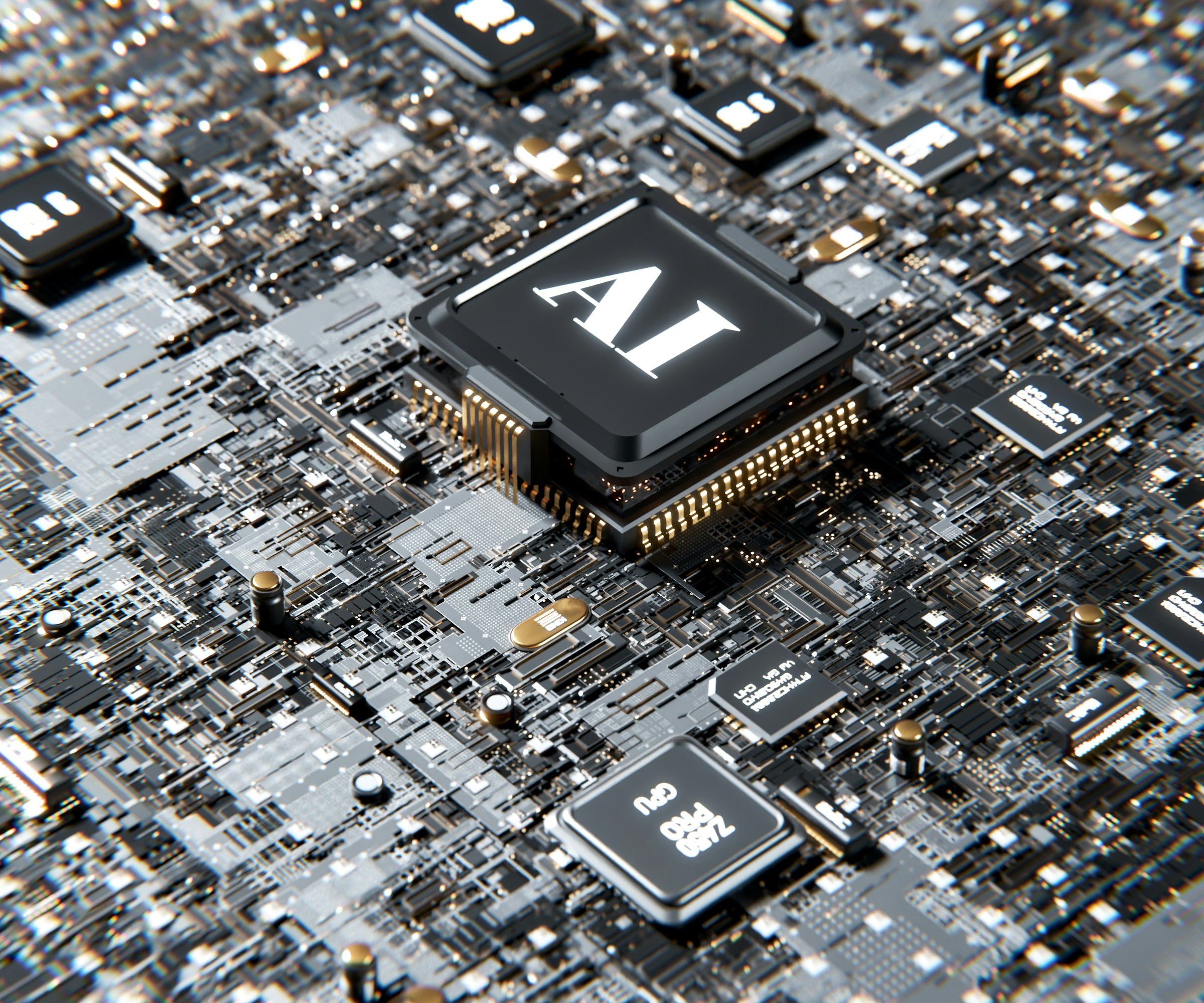
Types of artificial intelligence
The term is divided into two types of Artificial Intelligence: Weak AI and Strong AI. So far, it has not been possible to develop a strong AI from a human, i.e. an artificial intelligence that is on par with humans. All previous AIs are therefore considered “weak AIs”, behind which algorithms are hidden. With the help of these algorithms, AI can take over certain, previously learned tasks and serve a precisely defined purpose. To simulate the process from neuroscience, artificial neural networks with different depths are developed that correspond to the process of the human brain. AI can recognize patterns, determine relationships and solve specific problems. This process is called machine learning.
In which areas can AI be used in companies?
In production, AI can support quality control with the help of algorithms. Automated image recognition is used for this purpose to detect defects, for example in components. This eliminates the need for manual, human, random testing. In logistics, driverless transport vehicles can use AI to perform route calculations and optimize them in a subsequent step. AI can identify different customer needs and trends in marketing. For example, Artificial Intelligence can create product recommendations in online shops or contribute to the optimization of marketing measures by recognizing patterns in customer behavior.
Artificial Intelligence in the Supply Chain
In supply chain management, Artificial Intelligence can be used to create sales forecasts. For this purpose, historical data is compared with market changes and correlations are established that were previously invisible. Sales situations can thus be predicted precisely. Furthermore, it is possible to use Artificial Intelligence in warehousing. To calculate the optimal inventory level, different information is taken into account, such as historical consumption data, delivery times or storage costs. Furthermore, Artificial Intelligence can support the search for new applicants and filter them specifically for open positions. Last but not least, AI can create duty rosters using various data, such as employment contracts, labor law and company agreements.
Last updated:
2026-02-21
questions and answers
Was ist Künstliche Intelligenz und wie unterscheidet sie sich von herkömmlicher Software?
Künstliche Intelligenz (KI) bezeichnet Systeme, die Aufgaben ausführen, die normalerweise menschliche Intelligenz erfordern, wie Mustererkennung oder Entscheidungsfindung. Im Gegensatz zu herkömmlicher Software, die starren "Wenn-Dann"-Regeln folgt, lernen KI-Modelle aus Daten. Durch Machine Learning erkennen sie komplexe Zusammenhänge und verbessern ihre Leistung kontinuierlich. In der modernen Arbeitswelt hilft KI dabei, riesige Datenmengen zu strukturieren und Vorhersagen zu treffen, was die Grundlage für agiles Handeln und technologische Innovationen bildet.
Welche Vorteile bietet der Einsatz von KI speziell für das moderne Workplace Management?
KI ist der Motor für das "Smart Office". Sie ermöglicht Predictive Analytics: Systeme können die zukünftige Büroauslastung basierend auf historischen Daten und Trends präzise vorhersagen. Das hilft Unternehmen, Flächenbedarf optimal zu planen und Energiekosten zu senken. Zudem verbessert KI die User Experience, indem sie personalisierte Empfehlungen für Arbeitsplätze gibt oder Buchungsprozesse automatisiert. So wird die Verwaltung von Ressourcen effizienter und gleichzeitig intuitiver für die Mitarbeitenden, was die Akzeptanz von Hybrid-Work-Modellen massiv steigert.