
Desk hopping: Definition, advantages, disadvantages & meaning for modern workplaces
Desk hopping describes the targeted change of workplaces in the office and supports hybrid work models through greater flexibility and better use of space. Every day, employees choose the desk that suits their tasks, while digital tools such as Flexopus help to organize work areas transparently and implement desk hopping in a structured way in everyday work.
Table of contents
Desk hopping is one of the newer work concepts in the new work world and describes the conscious change of workplace within an office. Instead of a fixed desk, employees choose the space that best suits their current task on a daily or situational basis. This flexible model supports hybrid forms of work, promotes exchange between colleagues and helps companies use their office space more efficiently.
What is desk hopping?
Desk hopping is a workplace concept in which employees regularly change desks in the office instead of using a fixed space. This model is part of modern shared workplace concepts, such as desk sharing or Activity-Based Working and creates a needs-oriented working environment that adapts flexibly to different tasks.
In the office, employees choose the workplace that suits their daily focus — whether it's a quiet individual workplace, a collaborative space or a creative zone. Various digital solutions such as Flexopus make it easy to introduce, organize and book such models so that desk hopping is structured and transparent.
Desk hopping in modern office life
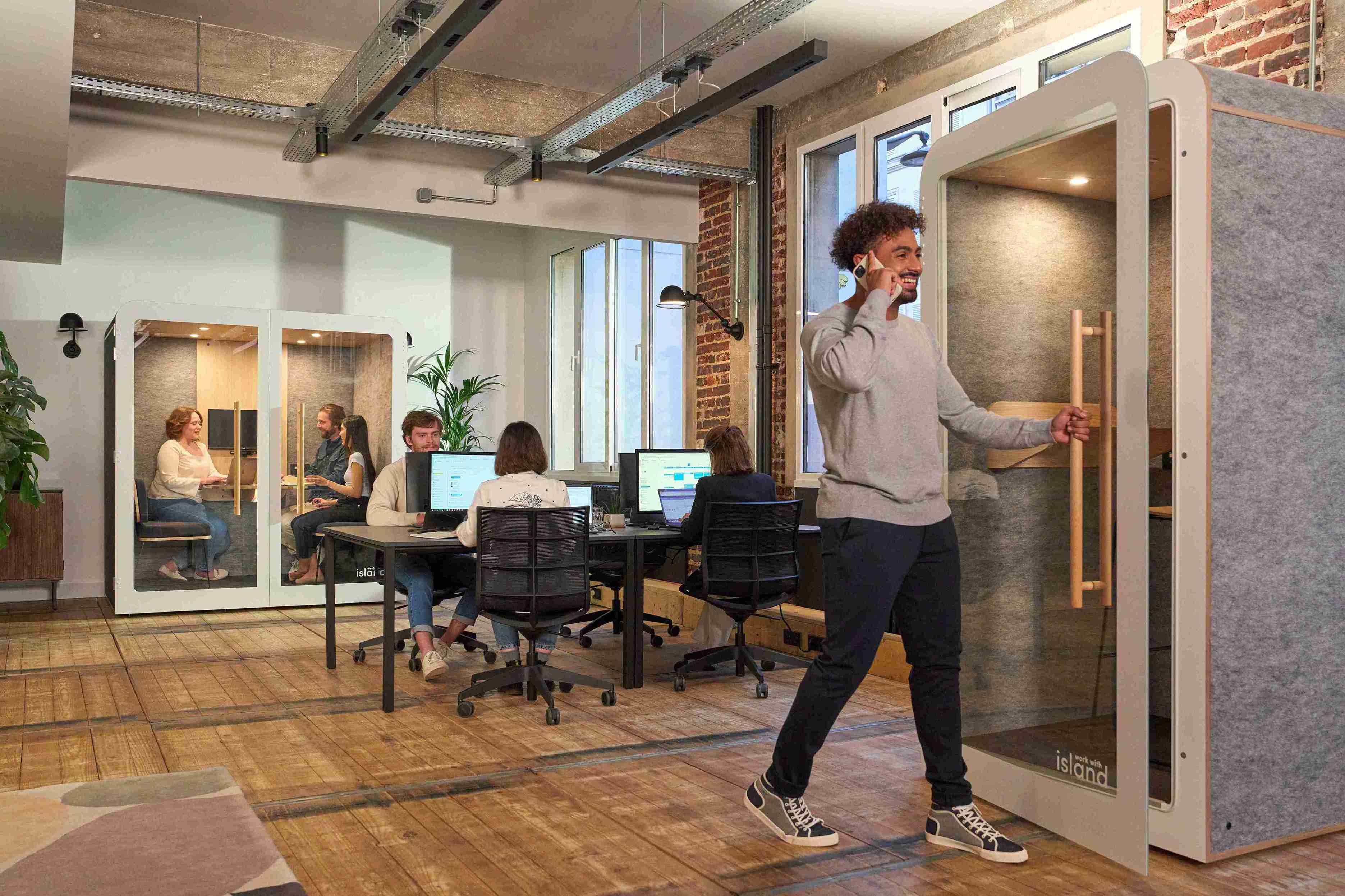
Desk hopping ensures that teams can flexibly switch between areas depending on the task. Regular job changes create variety, more exchange with colleagues and a work environment that supports spontaneous collaboration as well as focused work. Companies often use desk hopping to increase the flexibility of their rooms or to work hybrid with WFH to combine efficiently.
Desk hopping as part of hybrid workplace concepts
Desk hopping is closely linked to the development of hybrid work models. In many companies, activities are now spread across offices, home offices and other workplaces, increasing the need for flexible workplace structures. Instead of providing fixed desks, desk hopping allows the existing space to be used dynamically and helps teams adapt their work location to the task at hand.
As part of hybrid concepts, desk hopping serves as a link between the physical office and the digital working world: Depending on their presence, project phase or team collaboration, employees can use different areas without being tied to a fixed location. This makes the office a versatile work space that promotes both collaboration and concentrated work. At the same time, a more flexible space efficiency, which helps companies to use their office space efficiently and to react better to changing workloads.
For desk hopping to work smoothly, companies need clear structures and transparent occupancy overviews. Digital tools such as Flexopus support this process by allowing employees to book a workplace in advance or spontaneously and see which tables or rooms are available at any time. This creates a coordinated process without teams having to search for vacant places every day.
Desk hopping examples
1. Creative teams & project work
Depending on the work phase, a marketing or product team uses different rooms: focus areas for research, project areas for workshops, open zones for exchange. The flexible desk change promotes creative processes and improves team collaboration.
2. Hybrid employees in the office & home office
Employees who work alternately from home and in the office book the workplace that suits their tasks every day — focus space, meeting room or telephone booth. Structured access to equipment and workplaces makes hybrid work models feel much more intuitive.
3. Onboarding & team building
New employees sit down at changing desks to get to know different colleagues. This accelerates the understanding of procedures, teams, and processes across the company.
Benefits of desk hopping
Benefits for companies:
- Efficient use of space: Rooms, spaces and equipment are used optimally.
- More flexibility: Adaptation to hybrid work and variable team sizes.
- Strengthening corporate culture: More exchange between employees from different areas.
- Attractiveness as an employer: Modern working methods improve employer branding.
- Intelligent control: With Flexopus, companies can clearly plan workplace bookings, room bookings and shared open-plan offices.
Benefits for employees:
- Diverse work environment: Different zones offer more inspiration.
- Freedom of choice: Employees decide which position is suitable for which task.
- Better collaboration: More frequent meetings with colleagues promote innovation.
Flexibility in everyday work: Particularly valuable for hybrid teams. - Access to the right equipment: Depending on the desk, different equipment is available — from monitors to docking stations.
Disadvantages of desk hopping
Disadvantages for companies:
- Higher organizational effort without tools: Without a booking system, desk hopping quickly leads to chaos or double occupancy.
- Hygiene & order: Regular changes of location require clear rules and good cleaning processes.
- Additional equipment required: Power outlets, monitors and accessories must be available in many places.
- Cultural challenge: Not all employees are immediately open to a shared desk concept.
Disadvantages for employees:
- Lack of personal space: Your own items cannot be stored permanently. This can be remedied by additional services, such as the Flexopus Asset Management.
- Daily set-up: Constant assembly and disassembly can be seen as a burden.
- Distraction possible: The changing environment is not suitable for everyone.
The desired place is not always available: Without an intelligent booking system, this can be frustrating.
Conclusion
Desk hopping offers companies and employees a modern, flexible form of workplace use and strengthens collaboration and space economy. For this concept to work in everyday life, there is a need for clear rules and a solution that makes bookings transparent and provides orientation. Flexopus can help here by organising workplaces and rooms. This way, workdays can be clearly planned and the switch between different work environments is structured — without any additional organizational effort.
The most important questions summarized
What exactly is desk hopping and how does it differ from classic desk sharing?

Desk hopping describes the dynamic principle in which employees do not have a fixed desk, but “hop” flexibly between vacant seats depending on the task or team constellation. While desk sharing is the generic term for sharing tables, desk hopping emphasizes active movement and daily change. The aim is to increase agility in the office and to break the rigid connection to a location in order to create a lively and flexible working culture.
What are the benefits of desk hopping for internal communication and team dynamics?
By constantly changing the seats next to you, desk hopping breaks up social silos. Employees come into contact with colleagues from various departments with whom they would otherwise hardly interact. This promotes the informal exchange of knowledge, increases creativity and improves understanding of other areas of the company. The result is a dynamic network instead of rigid hierarchies, which accelerates problem solving, particularly in innovative and project-oriented companies.
What are the critical success factors for introducing desk hopping?
Two things are essential so that desk hopping does not degenerate into stress: A clear clean desk policy and intuitive booking software such as Flexopus. The software ensures that employees do not have to search, but can reserve their desired place in advance. There is also a need for a suitable IT infrastructure (laptops, docking stations) and lockers for personal belongings. Only when the technology works smoothly and the rules are transparent will the flexible model be accepted by the team.
Last updated:
2026-06-15