Workplace Management
2025-11-13
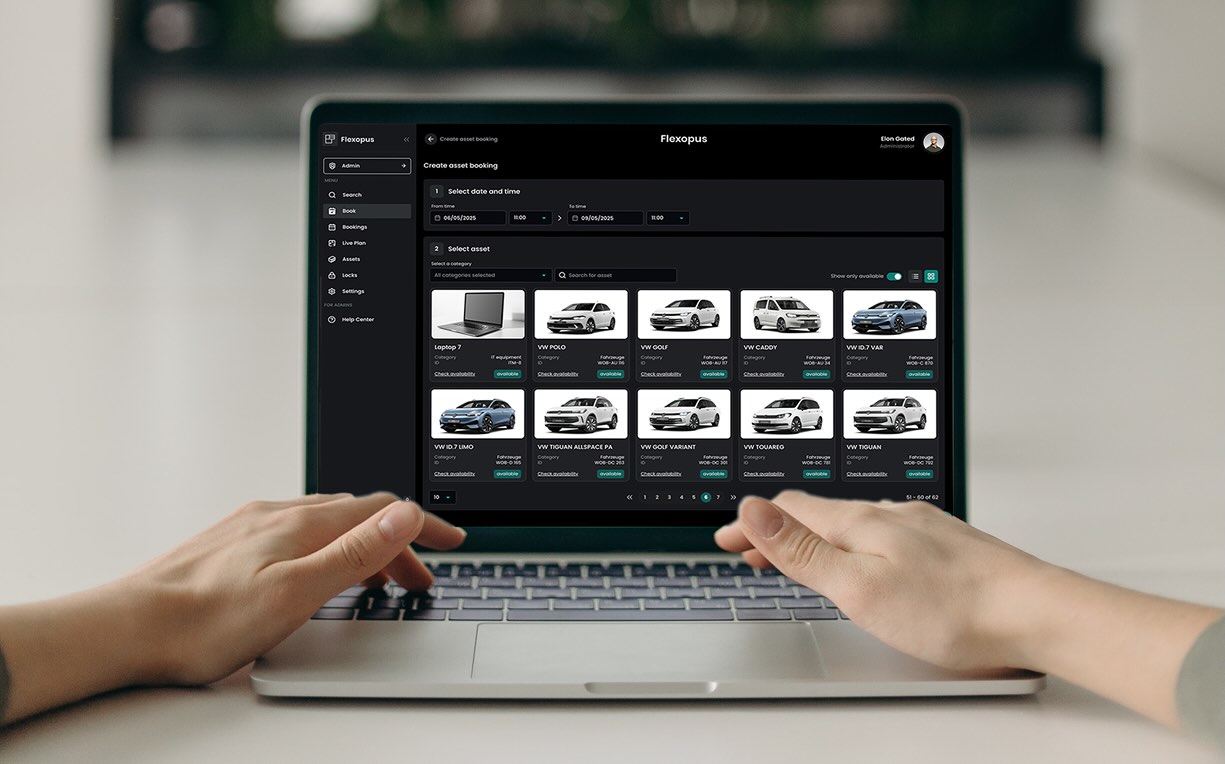
Digital inventory management: Manage company assets with Flexopus
Organization is half the battle! In this article, you will learn how digital inventory management helps you centrally track company assets, manage equipment efficiently, and maintain a clear overview at all times. From IT hardware and cameras to company vehicles: digital processes eliminate paperwork, simplify bookings, and ensure structured inventory management.

Table of contents
What is digital inventory management?
Digital inventory management refers to the software-supported organization of company assets. It involves centrally recording and managing relevant information about physical resources—such as IT hardware, vehicles, tools, office equipment, or lockers. The goal is to map company resources in a structured way and simplify their administration.
Why is digital inventory management important?
As inventory grows, locations multiply, and responsibilities shift, administrative overhead increases rapidly. Manual lists and Excel files become cluttered, information becomes outdated, and coordination takes up unnecessary time.
A digital solution reduces this effort, establishes clear responsibilities, and facilitates cross-location collaboration. At the same time, resources can be used more efficiently, unnecessary new purchases can be avoided, and shared items can be better organized in flexible work environments.

Digital inventory management with Flexopus
With Flexopus, companies can centrally record, manage, and flexibly provide their inventory. Assets such as IT hardware, company vehicles, tools, or lockers can be permanently assigned to employees or made available for booking. Additional information such as manufacturer, serial number, price, or ownership status ensures transparent documentation. Assets can also be accessed and managed directly on-site using QR codes.
What kind of inventory can be managed digitally?
Some examples of items that can be inventoried with Flexopus:
Inventory assets using free QR codes
Inventory management becomes efficient when it starts at the object itself. That is exactly what our Flexopus asset QR codes are designed for: each asset can be linked to a QR code sticker, allowing users and admins to access the relevant object directly by scanning it. Each QR code contains a unique ID and can be assigned to only one asset at a time.
The typical process is kept intentionally simple:
- Request QR codes
As an admin, you request the QR codes via email from the Flexopus support team. The request should include the URL of your Flexopus application, the desired quantity, your name, and your mailing address. The QR codes are sent by mail and are 100% free for Flexopus customers. - Attach QR codes to the asset
Once the stickers arrive, attach them to the assets you wish to inventory. We recommend labeling all assets first and then linking them in Flexopus. - Link QR codes in Flexopus
Linking is done via Flexopus: As an asset administrator log in to the standard user page, open the Assets section, select the asset overview, open the desired asset, and use the "QR code" tab to scan the sticker. The code is then uniquely assigned to the asset. - Test the connection and remove if necessary
To test, scan the QR code as a regular user and create a booking. If you need to remove a code, go to the admin area under Assets > All assets, open the asset, and delete the QR code in the General settings. Important: If you delete the QR code and want to reconnect it later, you must be on-site to do so.
Why is this relevant for inventory management? Because QR codes eliminate media discontinuity. They reduce manual searching, make devices easy to find, and ensure that inventory software is used in day-to-day operations rather than just for annual inventory counts. Here you will find a step-by-step guide for attaching asset QR codes.
Asset management for fixed asset accounting
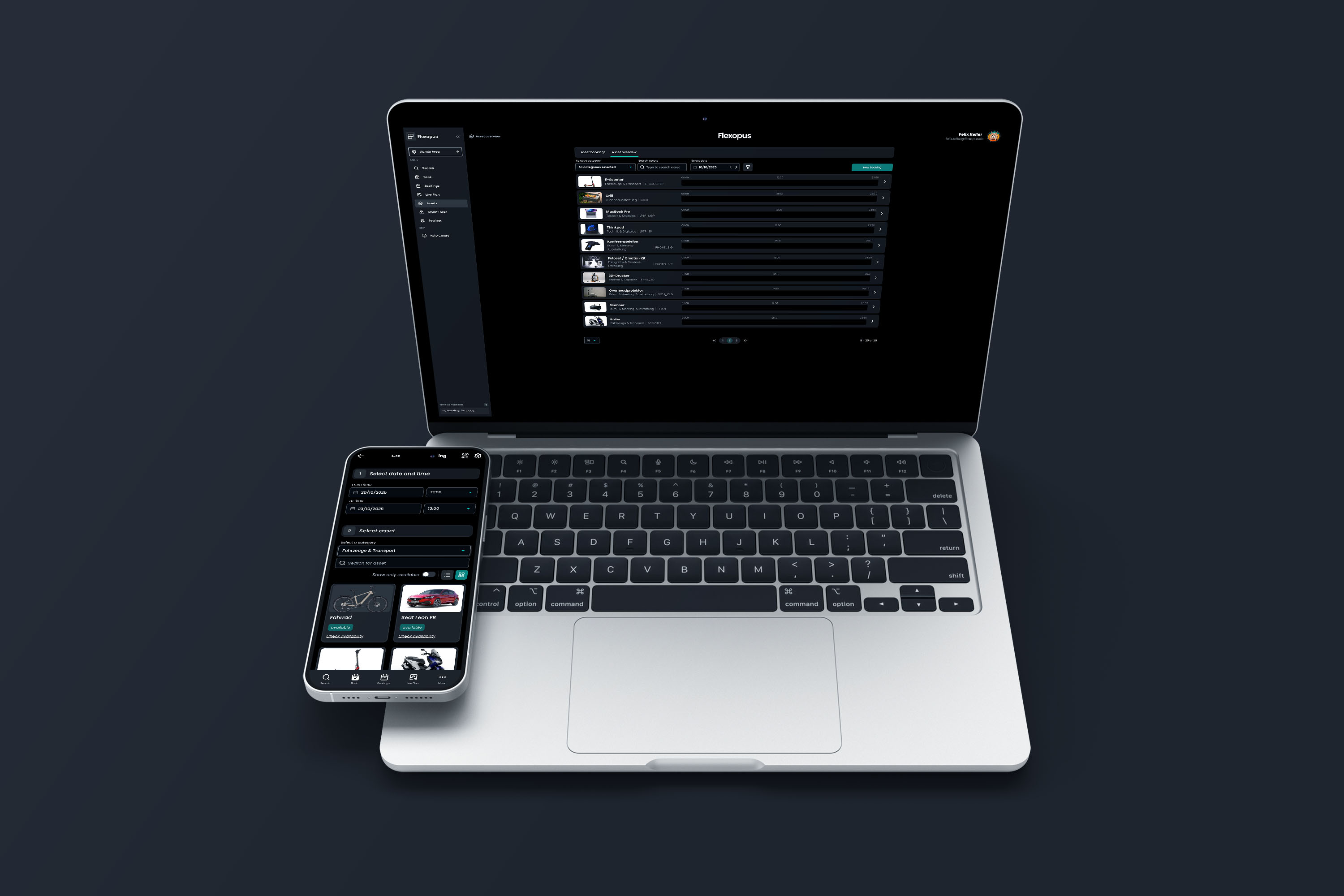
Fixed asset accounting relies on reliable master data: identification features, acquisition cost, ownership status, terms, and documents. The Flexopus asset management software is not a replacement for a full-scale financial system, but it provides a clean data foundation as inventory software and makes information available where it is generated: in everyday office life.
A major advantage: you can do more than just describe assets in a general way; you can specifically enrich them with information needed later in fixed asset accounting or in a preceding fixed asset accounting tool. This includes, among other things, manufacturer, serial number, production date, price, and ownership status (buy or lease).
Fields important for fixed asset accounting
If you want to use Flexopus as a data source for your fixed asset accounting, it is worth taking a look at the fields that can already be created as standard:
- Name and internal ID (e.g., an inventory/asset code): The cornerstone for unique identification within the company.
- Category: Helps to structure asset types (IT, vehicles, meeting, tools, etc.) and filter them cleanly later on.
- Manufacturer and serial number: Relevant features for verification, support, and audits.
- Production date: Useful for lifecycle and replacement planning.
- Price: Essential information regarding procurement and investment.
Conclusion
Effective inventory management isn't defined by a long list of features, but by how easily it integrates into your daily workflow. Flexopus connects the digital management of office and IT inventory directly with your existing booking and office processes.
The most important questions summarized
What is digital inventory management?

Digital inventory management tracks and manages company assets centrally within a single software solution.
Which inventory can companies manage digitally?
Companies can digitally manage almost any physical resource, such as IT hardware, vehicles, tools, office equipment, lockers, or accessories.
How does Flexopus support inventory and asset accounting without replacing a financial system?
Flexopus provides a clean data foundation with structured asset fields such as category, manufacturer, serial number, production date, price, and ownership type (purchase/lease). Inventory can be quickly imported, updated, and shared with other systems. This keeps master data centrally managed and readily available for inventories, audits, and asset processes—eliminating the need for duplicate record-keeping.
What is the difference between inventory management and asset management?
What is the difference between inventory management and asset management?
Last updated:
2026-07-29
.svg)

.webp)

