Hybrid working
2026-04-29
.webp)
How do I get employees back to the office?
Employees do not return to the office due to attendance requirements, but through real added value. Recent studies show that flexible hybrid models, social collaboration and modern workplace concepts are crucial. Companies that effectively coordinate office attendance and improve the office experience increase employee satisfaction, collaboration and space efficiency in the long term.

Table of contents
Many companies are currently facing the same challenge: the office is available, but it is being used significantly less than before. At the same time, many managers want more personal collaboration, stronger team cohesion, and better utilization of existing office space. However, classic attendance mandates often meet with resistance and have a negative impact on motivation and employer attractiveness.
The better solution: offer employees real added value for coming into the office.
Current studies clearly show that employees are generally willing to come to the office — but only if the commute is worth it.
Studies show: employees need a reason to come to the office
Several recent studies confirm that hybrid work has now become the standard and that companies must find new ways to make office work attractive.
1. Leesman Hybrid Experience Study
Leesman, 2024
Topic:
Investigation of the hybrid work experience, office quality, and reasons for using the office and home office.
Key summary:
The study shows that employees today make more conscious decisions about when to come to the office and when to work from home. The home office is often used for focused individual work, while the office is primarily relevant for personal collaboration, team exchange, and social interaction.
It is therefore crucial that the office offers clear added value. Employees expect a work environment that supports a variety of activities – from focused work to meetings, workshops, and informal conversations.
For companies, this means: office spaces must be specifically geared towards hybrid work. The focus is not on mere attendance, but on the quality of the office experience.
Link to the study:
Leesman – The Hybrid Experience
2. Hybrid Work Study
Stanford / Nicholas Bloom, 2024
Topic:
Impact of hybrid work models on productivity, employee satisfaction, and employee retention.
Key summary:
The Stanford study led by Nicholas Bloom shows that flexible hybrid models can bring benefits to both companies and employees. Hybrid work can increase satisfaction and strengthen employee retention without sacrificing productivity.
It is particularly relevant to recognize that rigid attendance requirements are less effective than clearly structured hybrid models. Employees benefit from flexibility and autonomy, while companies can still facilitate in-person collaboration.
For the return to the office, this means: companies should not rely on mandates, but rather purposefully define when office work makes sense – for example, for team days, workshops, project work, or face-to-face coordination.
Link to the study:
Stanford – Hybrid work is a win-win-win
3. Future of Work Survey
JLL, 2024
Topic area:
Future of work, workplace strategies, office space planning, and adaptation to hybrid work models.
Key summary:
The JLL Future of Work Survey 2024 shows that companies must better align their office spaces and workplace strategies with the requirements of hybrid work. The office is increasingly viewed as a strategic location – not just as an area with desks, but as a space for collaboration, culture, innovation, and the employee experience.
Good planning and coordinated attendance play a central role in this. When employees come to the office, they expect suitable workstations, good technical equipment, appropriate meeting rooms, and the opportunity to meet colleagues on-site.
For companies, this means: the office visit must be plannable, meaningful, and attractive. Modern workplace management solutions can help organize workstations, rooms, and resources efficiently.
Link to the study:
JLL – Future of Work Survey
Why do employees enjoy coming to the office?

We asked our colleagues internally why they personally enjoy coming to the office.
Interview question 1
What motivates you personally to come to the office instead of working from home?
Elias: "The great team on-site and the interpersonal connection that is hard to achieve from home. Plus, I can often work with more focus and efficiency in the office because the environment is set up for it, and any distractions are work-related."
Maxi: "I am motivated to come to the office to interact with my colleagues in person and strengthen our team spirit together."
Interview question 2
What advantages does working on-site with colleagues offer you in your daily work routine?
Elias: Especially in my specialty of content creation, creative exchange and the input of others are a major advantage. Video recordings, in particular, are impossible to implement from home. Ideas can be quickly cross-checked and challenged without having to schedule a separate meeting.
Maxi: When facing challenges or open questions, you can quickly touch base in the office and look for a solution together. In a home office, you often find yourself waiting for the other person to reply.
Interviewfrage 3
Was müsste ein modernes Büro bieten, damit Mitarbeitende gerne und regelmäßig ins Büro kommen?
Elias: Allem voran ein angenehmes Arbeitsklima. Wenn das Team und der Zusammenhalt untereinander bröckelt, läuft das gesamte System nur limitiert. Zudem sollten saubere, übersichtliche Arbeitsplätze, passende Ausrüstung (Möbel, Technologie, Ruhebereiche) und angenehme Luft und genug Sonnenlicht vorhanden sein, sofern die Art der Arbeit das zulässt. Der Arbeitsplatz sollte ein Ort sein, an dem in Ruhe und mit möglichst wenig Stress gearbeitet werden kann.
Maxi: Das passende Equipment, um seiner Arbeit gut nachzukommen, ist für mich wichtig.Und meiner Meinung nach darf auch eine gute Kaffeemaschine nicht fehlen.
Die Antworten zeigen häufig ähnliche Muster: Menschen kommen vor allem wegen sozialem Austausch, spontaner Zusammenarbeit, besserer Kommunikation und klarer Trennung zwischen Arbeit und Privatleben ins Büro — nicht wegen einer Pflicht.
3 Strategien, die Mitarbeitende wirklich zurück ins Büro bringen

1. Das Büro zu einem sozialen Erlebnisort machen
Mitarbeitende kommen eher ins Büro, wenn dort etwas passiert, das remote nicht in gleicher Qualität möglich ist: persönlicher Austausch, spontane Gespräche, gemeinsame Erlebnisse und Teamgefühl. Deshalb sollten Unternehmen bewusst soziale Anlässe schaffen, die niedrigschwellig, regelmäßig und freiwillig sind.
Gute Beispiele sind:
- Gemeinsame Lunches, etwa zu Geburtstagen, Jubiläen oder Team-Erfolgen
- Lunch & Learn-Formate in der Mittagspause mit internen oder externen Speakern
- After-Work-Events, zum Beispiel Feierabendbier in der Kneipe um die Ecke, Billard oder Dart
- Spieleabende, etwa mit Brettspielen, Quizformaten oder Konsolen-Spielen wie Super Mario Kart
- Wein-, Käse- oder Kaffee-Verkostungen als lockerer Ausklang nach der Arbeit
- Lunch Dates, bei denen Mitarbeitende monatlich zufällig einander zugelost werden
- Teamtage, Workshops oder gemeinsame Projekt-Sessions vor Ort
Wichtig ist dabei: Der Bürobesuch sollte nicht wie eine Pflicht wirken, sondern wie eine gute Gelegenheit, Kolleginnen und Kollegen zu treffen, Beziehungen zu stärken und Unternehmenskultur aktiv zu erleben.
2. Büroanwesenheit besser koordinieren
Ein häufiger Frustpunkt ist, dass Mitarbeitende ins Büro kommen und kaum Kolleginnen oder Kollegen antreffen. Deshalb sollte Anwesenheit planbar sein. Gemeinsame Bürotage, Teamtage oder Projekttermine helfen, dass sich der Arbeitsweg lohnt.
Mit Workplace-Management-Lösungen wie Flexopus können Teams:
- gemeinsame Bürotage planen
- Arbeitsplätze im Voraus buchen
- Kolleginnen und Kollegen im Büro finden
- Meetingräume reservieren
- Parkplätze organisieren
So entsteht mehr Verlässlichkeit: Wer ins Büro kommt, weiß vorher, wer ebenfalls vor Ort ist und ob passende Arbeitsplätze verfügbar sind.
3. Das Büroerlebnis verbessern
Neben sozialen Anlässen muss auch die Arbeitsumgebung selbst überzeugen. Mitarbeitende vergleichen das Büro heute direkt mit dem Komfort und der Flexibilität des Homeoffice. Deshalb sollte das Büro produktives Arbeiten, Austausch und Erholung gleichermaßen unterstützen.
Wichtige Faktoren sind:
- moderne, ergonomische Arbeitsplätze
- gute technische Ausstattung
- Ruhezonen und Fokusbereiche
- attraktive Meeting- und Kollaborationsflächen
- einfache Buchungsprozesse
- flexible Desk-Sharing-Konzepte
- angenehme Gemeinschaftsbereiche für Pausen und informellen Austausch
Das Ziel ist ein Büro, das nicht nur funktional ist, sondern einen klaren Mehrwert bietet: bessere Zusammenarbeit, stärkere soziale Bindung und ein Arbeitsumfeld, in dem Menschen gerne Zeit verbringen.
Desk Sharing: Weniger Leerstand, bessere Büroerfahrung
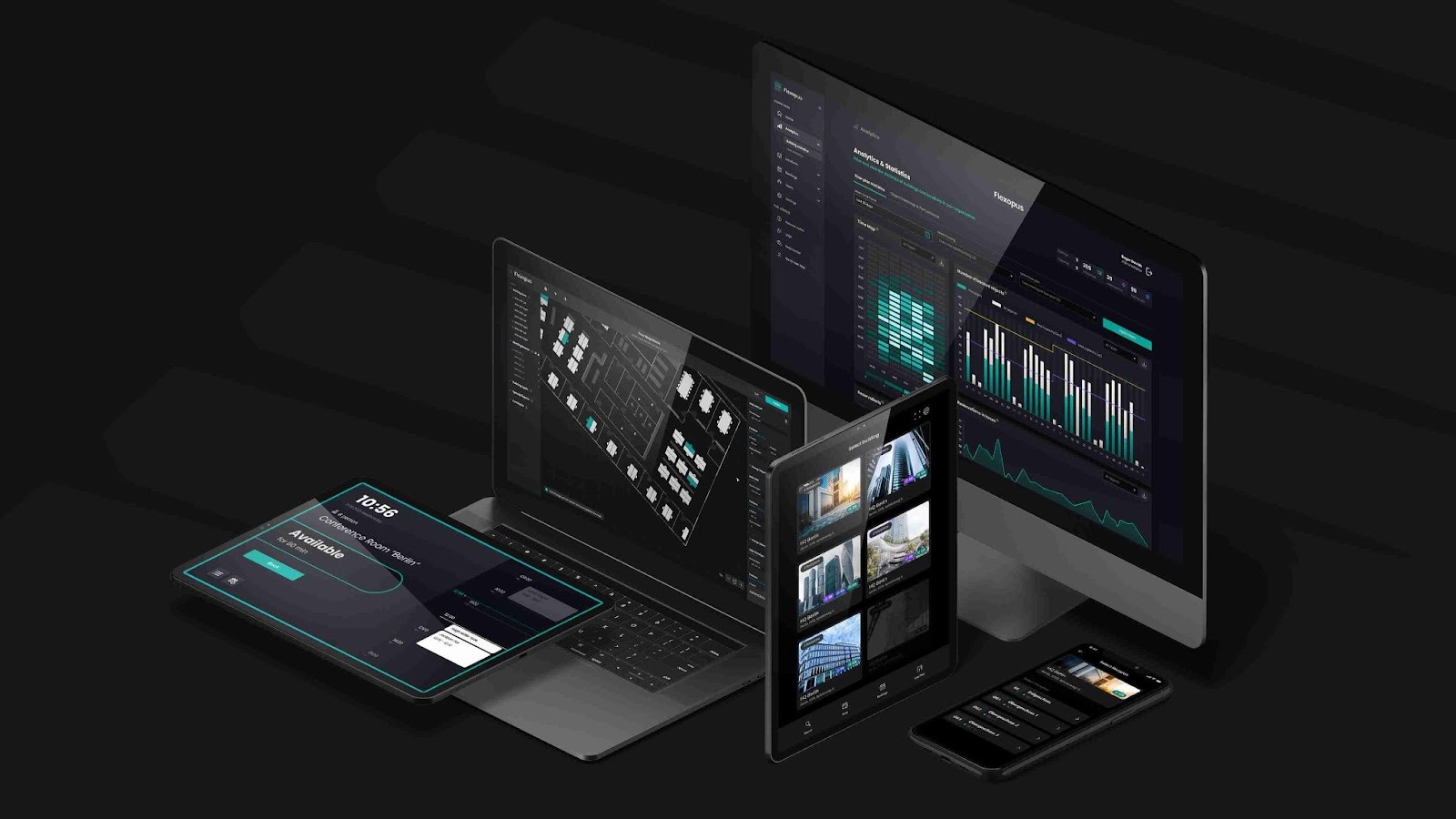
Durch hybride Arbeit bleiben viele feste Arbeitsplätze ungenutzt — verursachen aber weiterhin Kosten für Miete, Energie, Reinigung und Ausstattung.
Mit Desk Sharing buchen Mitarbeitende flexibel einen Arbeitsplatz nach Bedarf. Unternehmen können dadurch ihre Büroflächen strategischer nutzen und die Anzahl ungenutzter Schreibtische reduzieren.
Mit einer Software wie Flexopus lassen sich:
- Workstations
- Meeting rooms
- Parking spaces
einfach im Voraus buchen. Mitarbeitende sehen direkt, welche Kollegen vor Ort sind und welche Arbeitsplätze verfügbar sind. Zudem kann man mit Flexopus Gäste registrieren und jegliche Büro-Assets wie z. B. Poolfahrzeuge oder IT-Equipment buchen.
Fazit
Mitarbeitende kommen nicht wegen einer Anwesenheitspflicht zurück ins Büro, sondern wenn das Büro einen echten Mehrwert bietet.
Studien zeigen klar: Erfolgreiche Unternehmen setzen auf Flexibilität, Zusammenarbeit und moderne Workplace-Konzepte statt auf Zwang. Wer Büroanwesenheit sinnvoll organisiert, soziale Interaktion fördert und hybride Arbeit aktiv unterstützt, schafft langfristig attraktivere Arbeitsbedingungen.
Technologien wie Flexopus helfen dabei, hybride Arbeitsmodelle effizient umzusetzen und das Büro wieder zu einem Ort zu machen, an den Mitarbeitende gerne zurückkehren.
The most important questions summarized
How do you bring employees back to the office without coercion?

Companies should make office visits meaningful and attractive. This includes team days, modern workspaces, social events, and better attendance planning so that employees actually meet colleagues on-site.
Why is desk sharing important for hybrid work?
Desk sharing helps companies use office space more strategically and reduce costs. Employees can flexibly book suitable workstations, while companies reduce vacancies and better adapt their office space to actual usage.
What makes a modern office attractive to employees?
A modern office offers more than just a workstation. Important factors include good technology, flexible booking options, focus areas, social collaboration, and a work environment that supports both productivity and interaction.
Last updated:
2026-10-22
.svg)

.webp)
.webp)